


1. Introduction
The hydrological cycle, or water cycle, is a continuous, self-regulating process that governs the movement of water across the atmosphere, the Earth’s surface, and underground layers. Powered by solar radiation and regulated by gravity, it represents a massive, never-ending exchange of moisture that is intimately linked to the ocean and the global climate system.
By facilitating the constant flow of water between these domains, the cycle ensures the availability of freshwater—the lifeblood of terrestrial life and the majority of industrial processes. However, because the cycle is a loop, any disruption—from chemical pollution to the acceleration of evaporation due to rising temperatures—doesn’t just disappear. It propagates through every stage of the water cycle.
In this article you will learn:
✅ The mechanics of the water cycle
✅ How industrial extraction (from textiles to semiconductors) and land-use changes disrupt the water cycle
✅ The physical, regulatory, and reputational threats to companies posed by a shifting hydrological cycle
✅ Mitigation strategies, ranging from Zero Liquid Discharge (ZLD) technology to the LEAP risk framework.
By the end of this article, you will have a comprehensive understanding of the relationship between business and the water cycle, providing you with the insights needed to make water stewardship a pillar of your sustainability strategy.

1. The mechanics of the hydrological cycle
The hydrological cycle, commonly known as the water cycle, is the continuous movement of water across the Earth’s surface, atmosphere, and subsurface. Powered by solar radiation and regulated by gravity, it represents a massive, never-ending exchange of moisture that is intimately linked to the ocean and the global climate system.
The cycle consists of several core processes, or fluxes, that move water between different reservoirs (pools):
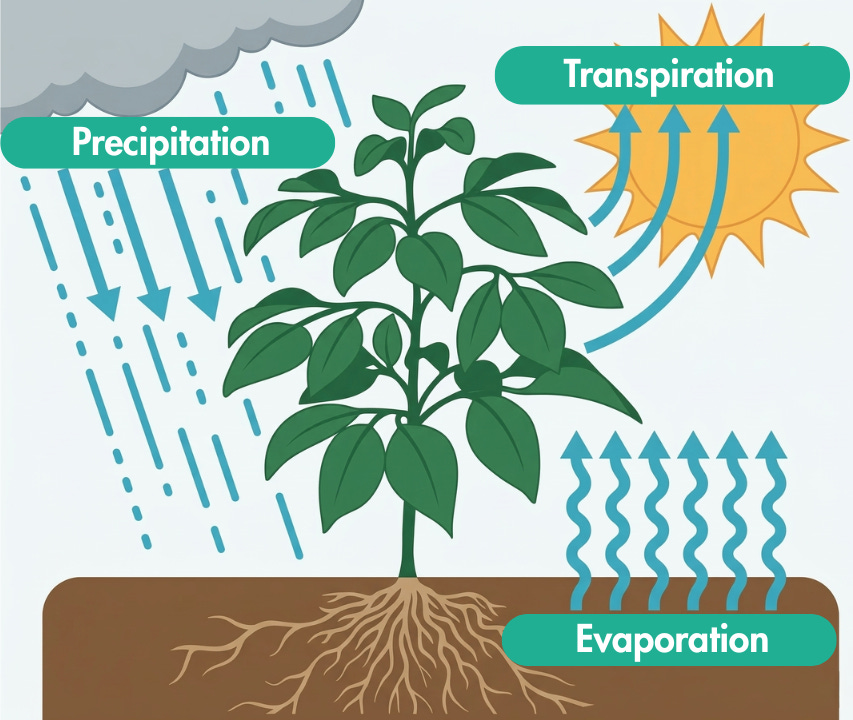
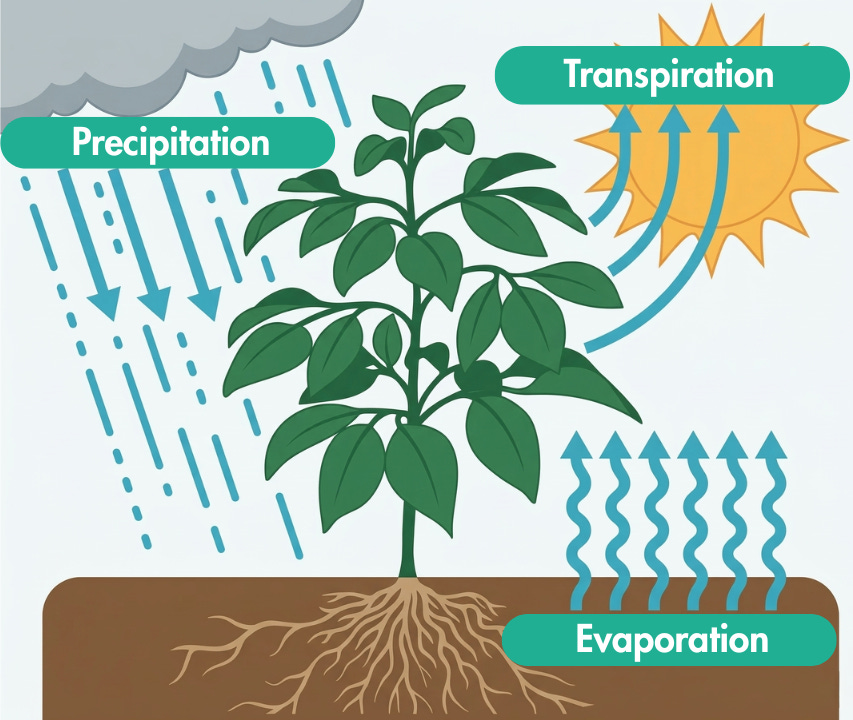
Evaporation and transpiration: Evapotranspiration is the combined process of water moving from the Earth’s surface to the atmosphere. It consists of evaporation, in which solar energy provides the latent heat required to convert liquid water from oceans and lakes into vapor, and transpiration, in which plants release water vapor through leaf pores. While vegetation is a vital contributor to local humidity, the vast majority of global atmospheric moisture originates from evaporation over open water.
Condensation: As water vapor rises into the atmosphere, it cools and transforms back into liquid water droplets or ice crystals, forming clouds.
Precipitation: When these condensation particles grow too large to be supported by rising air, they fall back to the Earth as rain, snow, or hail.
Runoff and infiltration: Precipitation that falls on land flows into surface bodies like rivers and lakes (runoff) or seeps into the soil to recharge groundwater aquifers (infiltration and percolation), eventually making its way back to the ocean
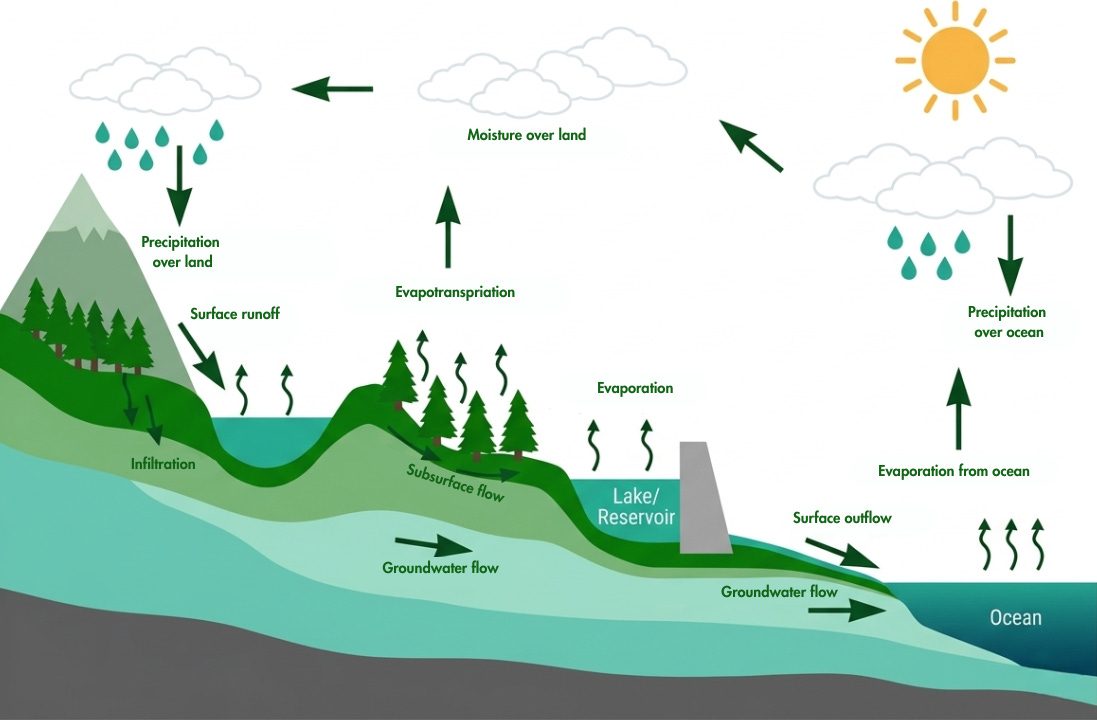
Because the cycle is a loop, any disruption—such as chemical pollution or significant changes in global temperature—doesn't just disappear. It propagates through every stage of the cycle, affecting everything from the purity of our drinking water to the intensity of global weather patterns.
2. How companies affect the hydrological cycle
Industrial and agricultural activities disrupt the natural balance of the water cycle primarily through over-extraction, pollution, and land alteration.
Massive freshwater extraction and aquifer depletion
Industrial sectors pull staggering volumes of water from natural reservoirs, often far faster than precipitation can recharge them.
Agriculture: Accounts for roughly 70% of global freshwater withdrawals. Inefficient methods like flood irrigation result in excess water evaporating or running off before it can be absorbed.
Textiles and apparel: Consume lots of liters of water annually, with a single cotton t-shirt requiring around 2,700 liters to produce.
Technology and semiconductors: Chip manufacturing relies on Ultrapure Water (UPW), requiring up to 38 million liters per day for a single fabrication plant. Globally, the semiconductor industry consumes approximately 210 trillion liters of water annually.
This aggressive extraction leads to the severe depletion of groundwater and underground aquifers, which can cause the land itself to sink (subsidence) and permanently lose its future water-storage capacity.
Severe pollution and water degradation
Corporations frequently discharge untreated or heavily contaminated water back into the environment, damaging the ecosystem’s ability to filter and clean water naturally.
Agricultural runoff introduces millions of tons of nitrogen, phosphorus, and pesticides into waterways, sparking toxic algal blooms and massive hypoxic “dead zones” where aquatic life cannot survive.
The textile dyeing process is responsible for an estimated 20% of global industrial water pollution, dumping heavy metals, synthetic dyes, and persistent toxic chemicals into rivers.
Land-use Changes
Corporate expansion often involves deforestation and paving over natural landscapes with impermeable materials like asphalt and concrete. This prevents precipitation from infiltrating the soil to recharge groundwater, instead forcing it to run off rapidly into rivers, exacerbating flash floods. Furthermore, large-scale deforestation reduces plant transpiration, which can literally dry out the atmosphere and alter rainfall patterns hundreds of kilometers downwind.
3. How the hydrological cycle affects companies (water risk)
As climate change accelerates the hydrological cycle—creating longer droughts and more intense, erratic rainfall—companies are increasingly exposed to severe water risks. This impacts their bottom line in three primary ways.
1. Physical risks to operations
When the water cycle shifts, it directly threatens the viability of supply chains and manufacturing.
The tech sector: Around 40% of existing semiconductor facilities are located in basins projected to face high or extremely high water stress by 2030. During Taiwan’s historic 2021 drought, reservoirs dropped below 5% capacity, forcing the chip manufacturer TSMC to spend millions of dollars on fleets of water trucks just to keep their factories running.
The energy sector: Thermoelectric and nuclear power plants rely on massive amounts of river water for cooling. As climate change causes river water levels to drop and water temperatures to rise, energy companies are forced to scale back or shut down power generation to avoid overheating the rivers and killing aquatic life.
Agriculture: Rising temperatures increase evaporation rates, drying out soils and decimating crop yields, forcing farmers to bear the cost of expensive artificial irrigation or face total crop failure.
2. Regulatory risks
As physical water scarcity worsens, governments are forced to implement stricter regulations. Companies face sudden limitations on water allocations, drastically increased water tariffs, or revoked discharge permits.
3. Reputational and social risks
Water is a shared resource. When a corporation consumes vast amounts of local water during a drought, or pollutes a community’s drinking supply, they face intense public backlash, protests, and loss of consumer trust.
4. Corporate mitigation: Moving to a circular water economy
To survive the changing hydrological cycle, many companies are shifting from a linear take-make-dispose model to a circular economy model that prioritizes water reuse and ecosystem regeneration.
Zero Liquid Discharge (ZLD): Advanced technological systems are being adopted to treat and purify industrial wastewater on-site. ZLD systems can recover up to 95% to 99% of liquid waste, allowing facilities to reuse the same water endlessly and eliminate their discharge of pollutants into the environment.
Sustainable agriculture: Farms are transitioning to precision drip irrigation, which delivers water directly to plant roots, minimizing evaporation, and planting vegetative buffer zones to trap nutrient runoff before it reaches streams.
Integrated water stewardship: Companies are utilizing risk assessment frameworks like the LEAP approach (Locate, Evaluate, Assess, Prepare) to map out exactly where their operations intersect with sensitive water basins, allowing them to implement nature-based solutions and reduce their vulnerability to a shifting climate.
![[INSIGHT] How to identify water risk in your supply chain: The LEAP approach in practice](https://substackcdn.com/image/fetch/$s_!bjje!,w_140,h_140,c_fill,f_webp,q_auto:good,fl_progressive:steep,g_auto/https%3A%2F%2Fsubstack-post-media.s3.amazonaws.com%2Fpublic%2Fimages%2F18e8a8aa-bc84-4e32-9322-b074b22a517d_1857x1731.png)
A common failure in corporate sustainability is treating water risk as an isolated, site-specific issue. The reality is that freshwater and marine systems are deeply bound together by the global hydrological cycle.
Sources
Fast fashion: EU laws for sustainable textile consumption | Topics | European Parliament
Understanding the fashion water footprint - IDRA | The Global Desalination and Water Reuse Community
Freshwater Conservation & Sustainability | World Wildlife Fund
Water Nexus: Can Semiconductors and Sustainability Coexist in Taiwan? – Taiwan Insight
Case-study Water dependency of the tech sector
Nonpoint Source: Agriculture | US EPA
Extreme Heat Shuts Down Some Nuclear Reactors in Europe - The New York Times
Sources and Solutions: Agriculture | US EPA
Clothing Dye Runoff and its Environmental Impact
Textile finishing dyes and their impact on aquatic environs - PMC
Semiconductor industry faces water, sustainability challenges | Manufacturing Dive