As global water stress intensifies, businesses can no longer afford to treat water as an unlimited resource. Whether it's textile dyeing in drought-prone basins or semiconductor fabs dependent on ultrapure water, supply chains are increasingly vulnerable to water-related disruption.
Water risk, in this context, refers not just to scarcity, but also to water quality, community conflict, and regulatory exposure. The LEAP approach is a 4-phase framework for identifying nature-related risks and opportunities.
What you’ll learn in this article:
✅ What the LEAP approach is
✅ Applying LEAP in a corporate supply chain context
✅ Benefits and challenges of applying LEAP
By the end of this article, you’ll understand how to apply the LEAP methodology to build water resilience into your sustainability strategy.
2. Understanding the LEAP approach
The LEAP framework stands for:
Locate: Identify geographies in your value chain that interface with water
Evaluate: Assess water-related dependencies and impacts in those areas
Assess: Determine which risks and opportunities are material
Prepare: Develop actions, targets, and disclosures
Originally developed by the Taskforce on Nature-related Financial Disclosures (TNFD), LEAP is a recommended method to structure your materiality assessment and reporting process for water and marine resources.
Each LEAP phase maps directly to ESRS expectations: the first three support the double materiality assessment, while the fourth focuses on due diligence, policies, and reporting.
3. Applying LEAP in a corporate supply chain context
1. Locate: Where do water risks exist?
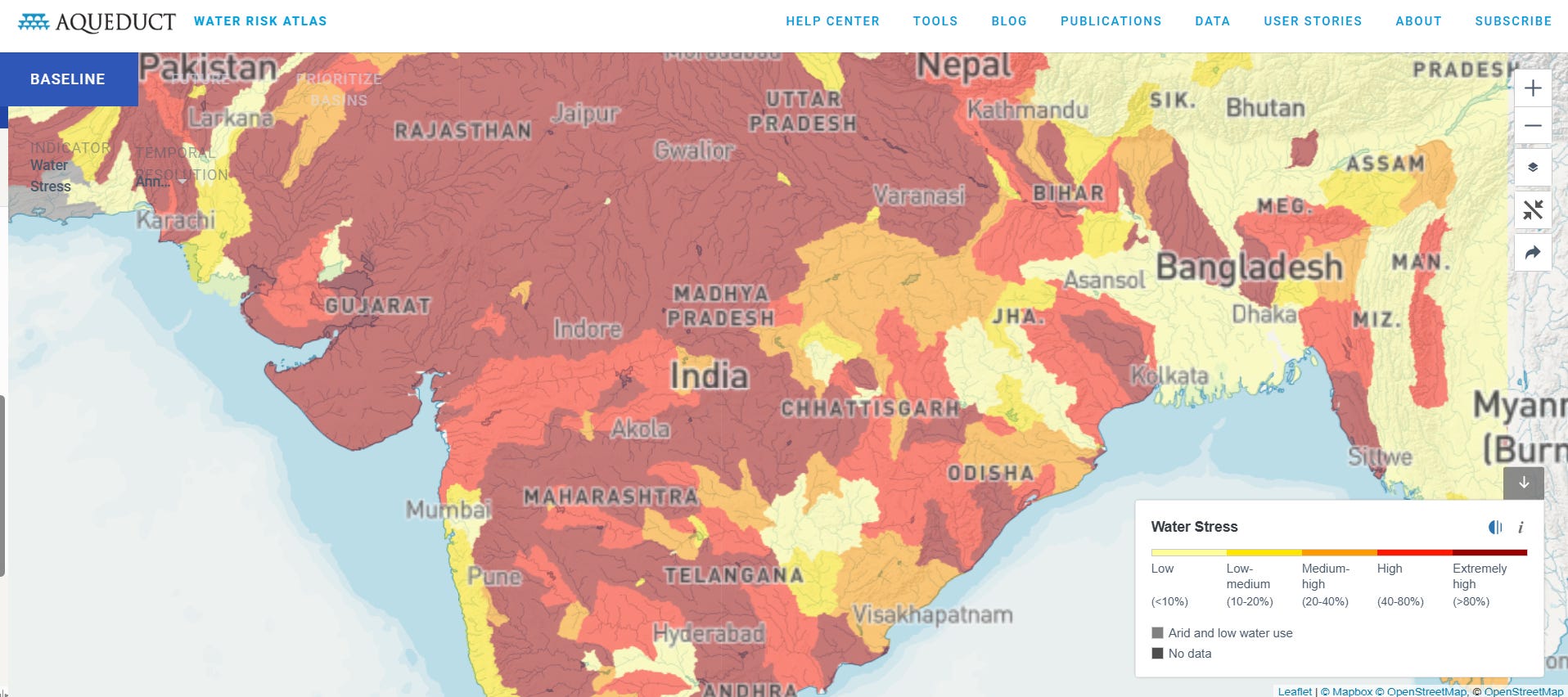
Start by creating a map of all your company’s facilities, as well as key suppliers throughout your value chain. This includes not only where your factories or offices are located, but also where your suppliers extract raw materials, produce goods, or manage logistics. Once you have this map, the next step is to overlay it with publicly available water risk data. Recommended tools include:
GIS tools to overlay supplier data on water risk basins
According to ESRS E3, companies should identify whether their operations or suppliers are located in:
Areas of high water stress – These are regions where 40% to 80% of the available water is already being withdrawn for human use (e.g., agriculture, industry, households). In such areas, adding more water demand, like expanding a production line or sourcing from a new supplier, can quickly become unsustainable or trigger conflict.
Areas of extremely high water stress – In these zones, more than 80% of the available renewable water supply is already being used. This leaves very little buffer for seasonal changes, population growth, or droughts. Even small shifts in rainfall or usage can cause major shortages, affecting operations, communities, and ecosystems.
Broader “areas at water risk” – These include locations where water-related problems might not be about scarcity, but rather:
Water quality degradation (e.g., heavy metals, pesticides, microplastics)
Poor accessibility (e.g., rural areas without reliable infrastructure)
Weak governance (e.g., lack of water management, corruption, unclear water rights)
Conflict with local communities (e.g., when companies’ water use reduces what’s available for households or agriculture)
Identifying these zones early helps prioritize where action is needed most, and where risks to your business and stakeholders are likely to be material under ESRS.
For example, an apparel brand might find its dyeing suppliers concentrated in Bangladesh and northern India, regions categorized as “extremely high” stress basins. Similarly, a semiconductor company with fabs in Arizona or Taiwan will find itself operating in drought-prone zones.
2. Evaluate: How does your company rely on and affect water?
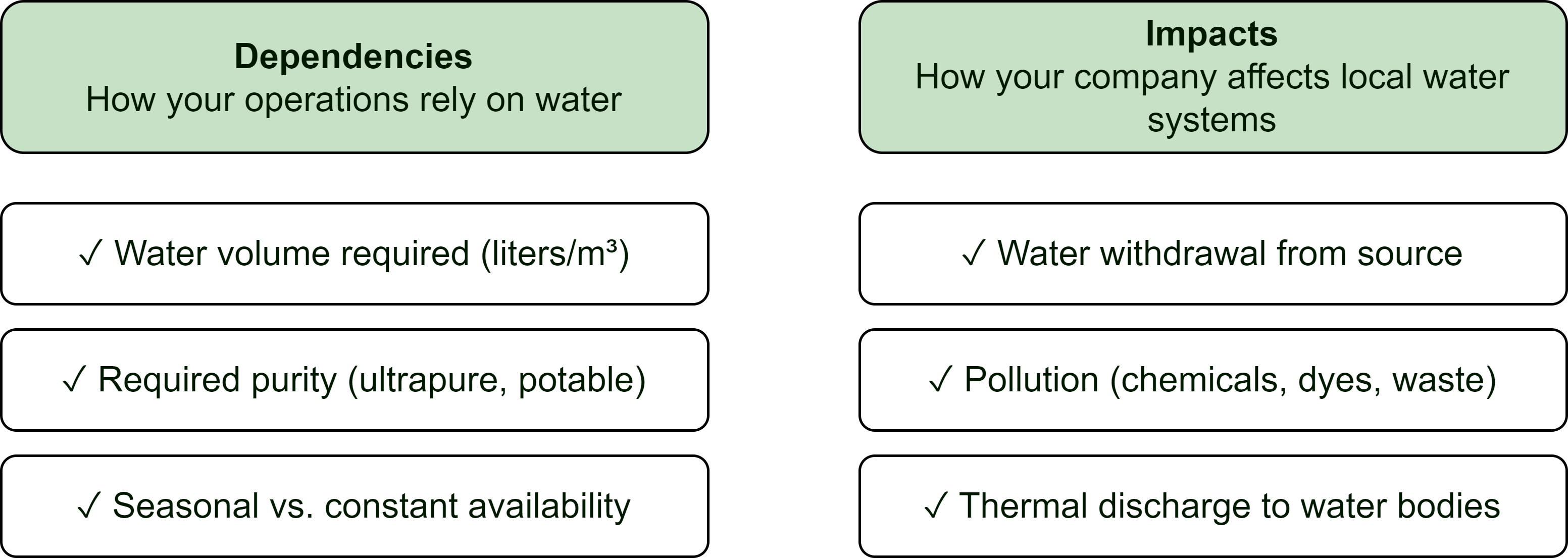
Once you’ve identified where your company and suppliers operate in relation to water-stressed areas, the next step is to understand how your business depends on and affects water in those locations.
You’ll want to assess two key things:
This evaluation should include both:
Direct operations (e.g., water used at your own facilities)
Upstream supply chain (e.g., water used by suppliers growing crops, mining materials, or processing chemicals)
To gather this information, companies can use: internal data (e.g., utility bills, production logs), supplier questionnaires, such as those from CDP (Carbon Disclosure Project), stakeholder engagement, particularly with communities or regulators near key sites.
Importantly, you should also consider any positive contributions your company may be making, such as investing in water treatment or reuse systems, participating in watershed restoration projects, supporting community access to clean water.
Example: A food & beverage company sourcing sugarcane from northern India may uncover:
A high dependency on irrigation in drought-prone areas
A significant impact through aquifer depletion and fertilizer runoff
3. Assess: What’s materially significant?
After evaluating how your company and suppliers rely on water, and how they might affect it, the next step is to decide which issues are material. This means identifying the water-related risks, impacts, or opportunities that are significant enough to influence your decisions, sustainability reporting, or stakeholder relationships.
Four types of issues to look for:
Physical risks: such as water shortages, flooding, or contamination that could disrupt operations.
Transition risks: like changing water regulations, reputational damage, or rising costs linked to water use.
Systemic risks: for example, the long-term collapse of an aquifer or the degradation of entire ecosystems.
Opportunities: including improved efficiency, lower operating costs, or stronger relationships with regulators and communities.
To determine if something is material, you should consider:
How severe the impact could be, on people, ecosystems, or your operations
How likely it is to happen
What the financial consequences might be (e.g., supply chain disruption, fines, or cleanup costs)
Whether stakeholders, such as local communities, investors, or NGOs, are raising concerns
Real-world examples help illustrate the stakes. In the apparel industry, research from Planet Tracker found that many suppliers operate in regions where more than 80% of water is already withdrawn. In those “extremely high stress” areas, there’s little room for growth, and a high risk of disruption or backlash.
In the tech sector, Taiwan’s 2021 drought forced semiconductor companies to truck in emergency water supplies. One company spent more than €20 million just to maintain production, proving how fast physical water risk can turn into a financial problem.
4. Prepare: What actions and disclosures are required?
If water is determined to be material (as it often will be), companies must respond with appropriate:
Policies (ESRS E3-1): Covering water sourcing, use, pollution prevention, and product design
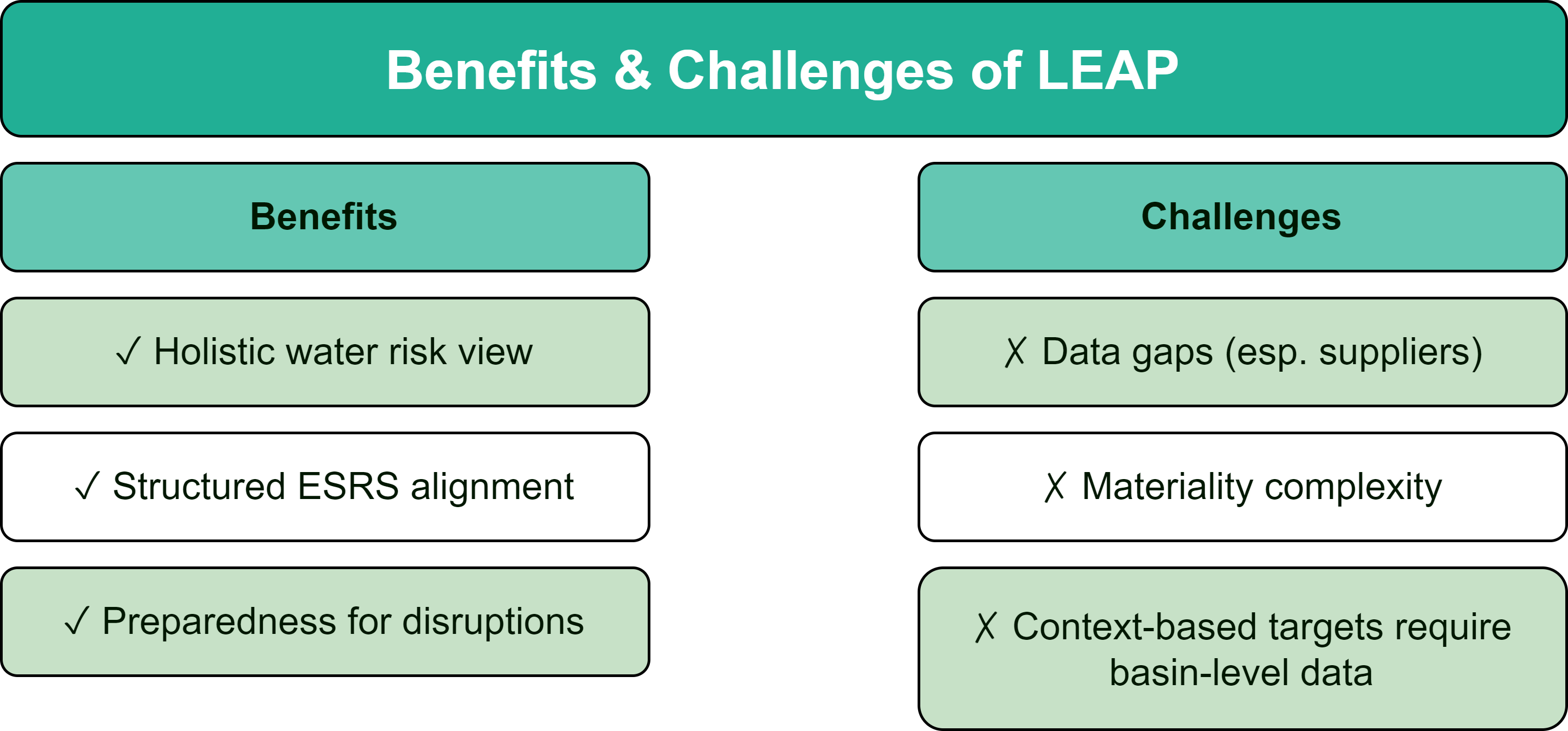
Applying the LEAP method to identify water risks in your supply chain has clear advantages, but it also comes with a few hurdles to keep in mind.
Benefits LEAP helps companies build a more complete and reliable view of how water affects their business:
It gives you a holistic view of water risks across your entire value chain and not just in your own operations. So, also in supplier regions where risks might be hidden.
It offers a structured way to align with ESRS E3.
It improves preparedness for disruptions like droughts, floods, or local conflicts over water, helping avoid costly surprises.
Challenges That said, using LEAP effectively does take work:
Data can be hard to get, especially from suppliers in regions with limited monitoring or reporting systems.
It can be difficult to define what’s material when weighing both financial impacts and ecological damage. Not all risks are easy to quantify.
Setting meaningful water targets often requires detailed, basin-level data, which may not be available or easy to interpret without local expertise.
5. What’s next?
The LEAP approach offers a clear and actionable pathway to managing water-related risks in business. It helps with identifying where water matters most and evaluating dependencies and impacts. More importantly, LEAP transforms water from an operational blind spot into a strategic asset.