


1. Introduction
Why do humans struggle to act decisively against long-term threats like climate change? A recent conversation with Harvard psychologist Dan Gilbert in The Happiness Lab with Dr. Laurie Santos podcast sheds light on the cognitive biases that cause our inaction. Despite knowing the negative consequences, we seem psychologically unequipped to treat climate change with the urgency it demands. Why is that, and how can we use our psychology to drive more effective action?

2. Why we ignore climate change: the psychology of inaction
Our brains evolved to respond swiftly to immediate, visible dangers, like a predator that might attack us. Climate change, however, lacks the characteristics that typically trigger urgent responses:
It lacks a clear enemy. We react strongly to threats with clear intent, like terrorism or crime. Climate change is an unintended consequence of human activity, not a deliberate attack, making it harder to perceive as a direct threat.
It unfolds slowly. Unlike an explosion or flood, climate change is a gradual crisis. Our brains struggle to detect slow-moving dangers, adapting to each incremental change instead of reacting decisively.
It feels distant. The most severe consequences often seem to affect future generations or distant regions. As a result, we don’t feel an immediate personal stake in the crisis.
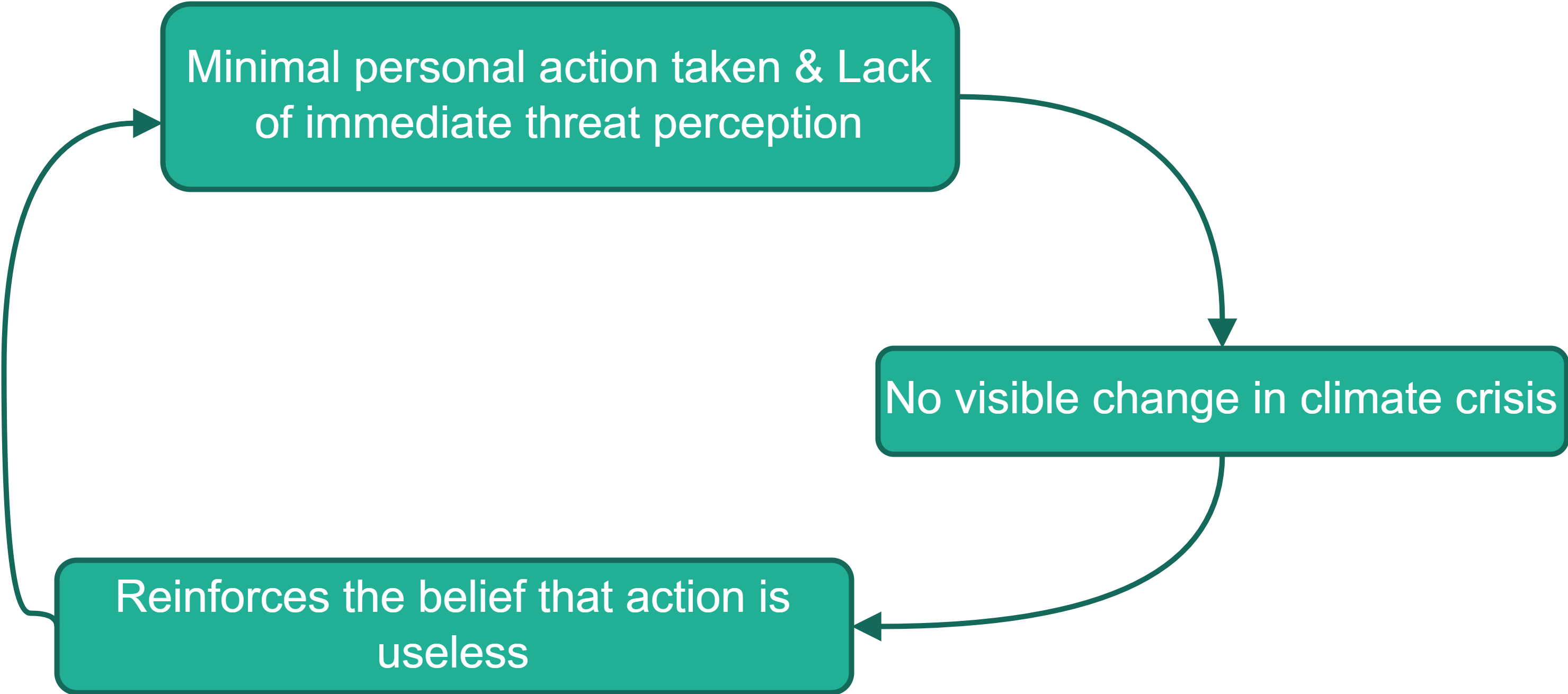
Meanwhile, this might result in a feedback loop of inaction:
3. The power of social norms: what your neighbor does matters
Despite our psychological blind spots, social influence can be a powerful motivator for climate action.
Research by Robert Cialdini shows that people are more likely to adopt behaviors if they believe others are already doing them.
The hotel towel study: Guests were most likely to reuse towels when they saw a sign saying that most guests who stayed in their room had done so.
Energy bills and social comparison: Utility companies found that homeowners reduced their energy consumption when shown a comparison of their usage against their neighbors'.
4. Reframing climate action: from sacrifice to opportunity
One of the biggest psychological barriers to climate action is the perception that it requires sacrifice. However, shifting the narrative to focus on benefits, like economic opportunities, can be more persuasive.
The green economy: Investing in clean energy creates jobs, boosts local economies, and fosters innovation.
The electric vehicle effect: EV owners report high satisfaction, not just from environmental benefits but also from performance and cost savings.
The ‘Don’t Mess with Texas’ campaign: By tapping into state pride, a simple slogan led to a 72% reduction in littering.
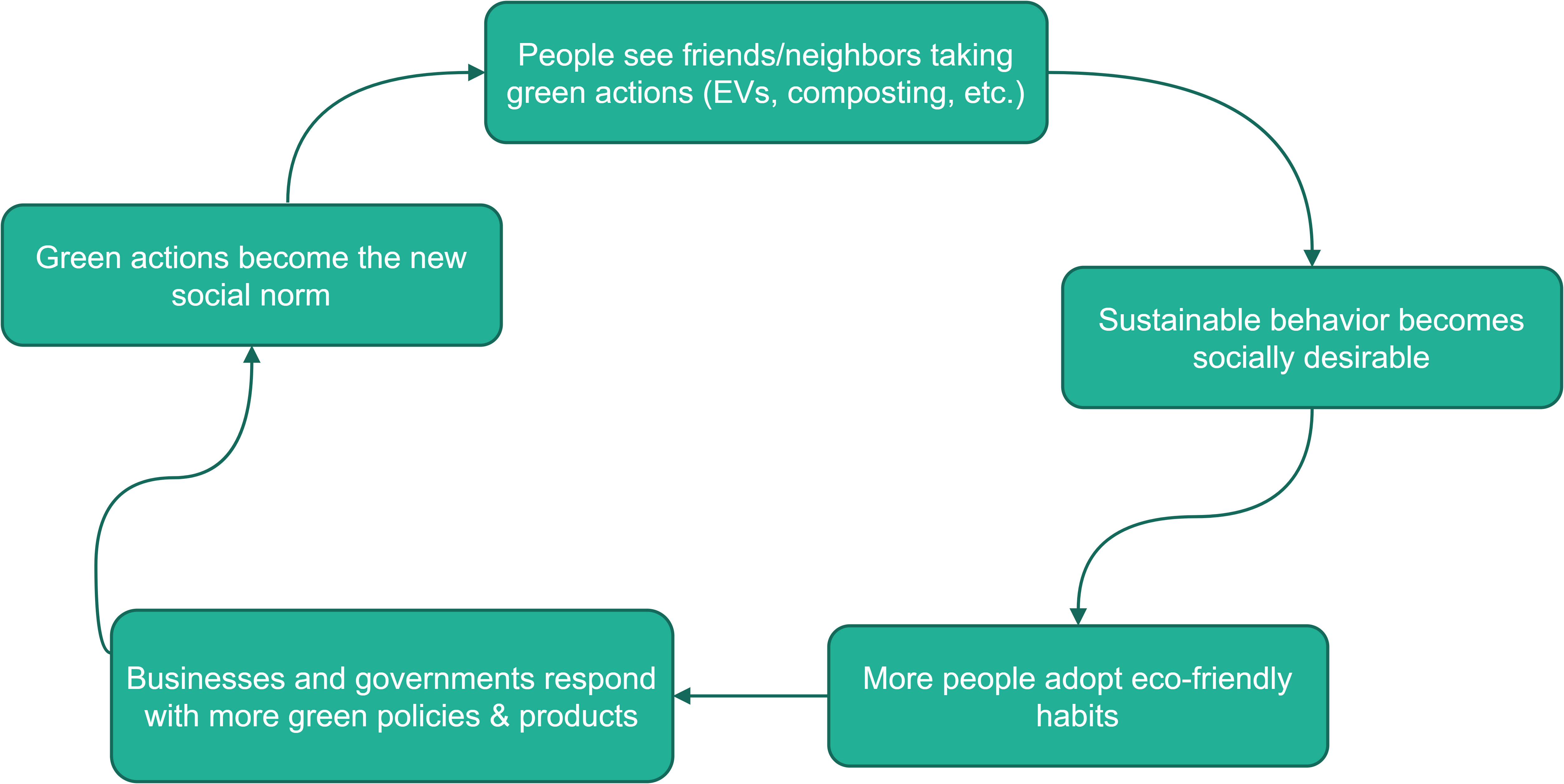
When reframed successfully we can achieve a feedback loop of action instead of inaction:
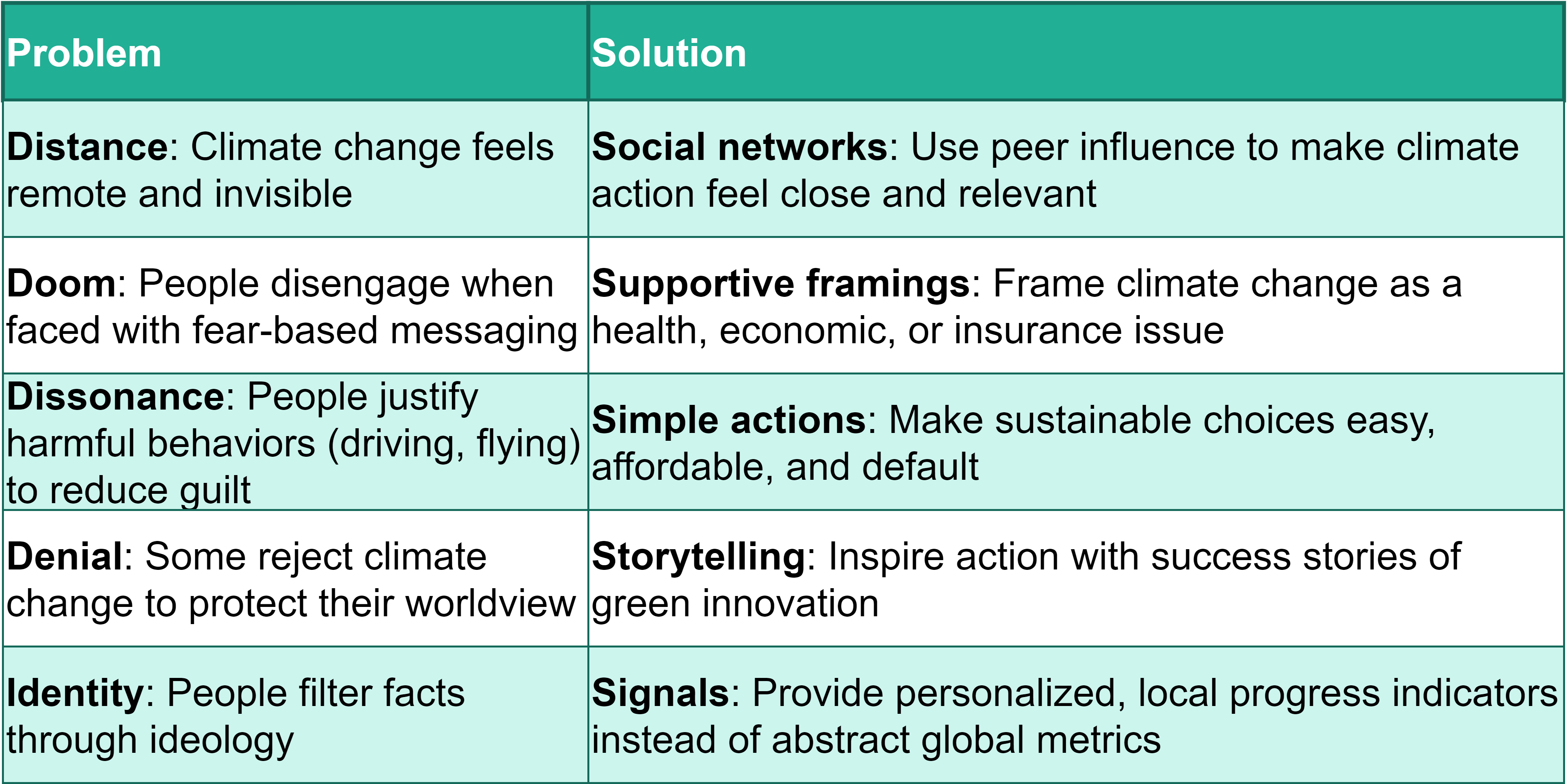
Another way to achieve action is to counter these five common problems of inaction with these solutions:
5. Conclusion
Climate change is not the kind of threat humans naturally respond to, but understanding our cognitive biases allows us to craft smarter interventions. Instead of relying on fear or guilt, we can:
Leverage social norms. Make climate-friendly behaviors visible and desirable.
Frame action as an opportunity. Highlight the economic and personal benefits of sustainable choices.
Push for systemic change. Individual actions matter, but policy shifts are important for large-scale impact.
As Dan Gilbert notes, the good news is that most people agree climate change is a problem. The challenge is translating that agreement into meaningful action. By aligning climate solutions with human psychology, we can make this translation easier.
Relevant Sources
Effects of fear-arousing communications | Educational technology research and development
Full article: Using normative social influence to promote conservation among hotel guests
Tapping our powers of persuasion
Five ways to climate action | BI
2022 EV Driver Survey - Plug In America
Electric vehicle sales and satisfaction continue to rise
Cheaper and Cleaner: Electric Vehicle Owners Save Thousands
Job Creation and Economic Growth | Department of Energy