


Last updated: 07/13/2025
1. Introduction
Poka-yoke, which means “mistake-proofing” in Japanese, is a quality control approach that makes it nearly impossible to make mistakes in a process. While originally developed to improve product quality, its environmental applications are significant: by preventing defects, companies prevent material waste, energy overuse, and pollution.
In this article, you will learn:
✅ How poka-yoke works and the principles behind it
✅ Why error prevention is also environmental prevention
✅ Real-world examples from industries like automotive, electronics, healthcare, and logistics
✅ How poka-yoke maps to ESRS reporting standards
✅ How to apply poka-yoke in your own business
This guide will show how poka-yoke helps your business to get more sustainable.

2. What is poka-yoke?
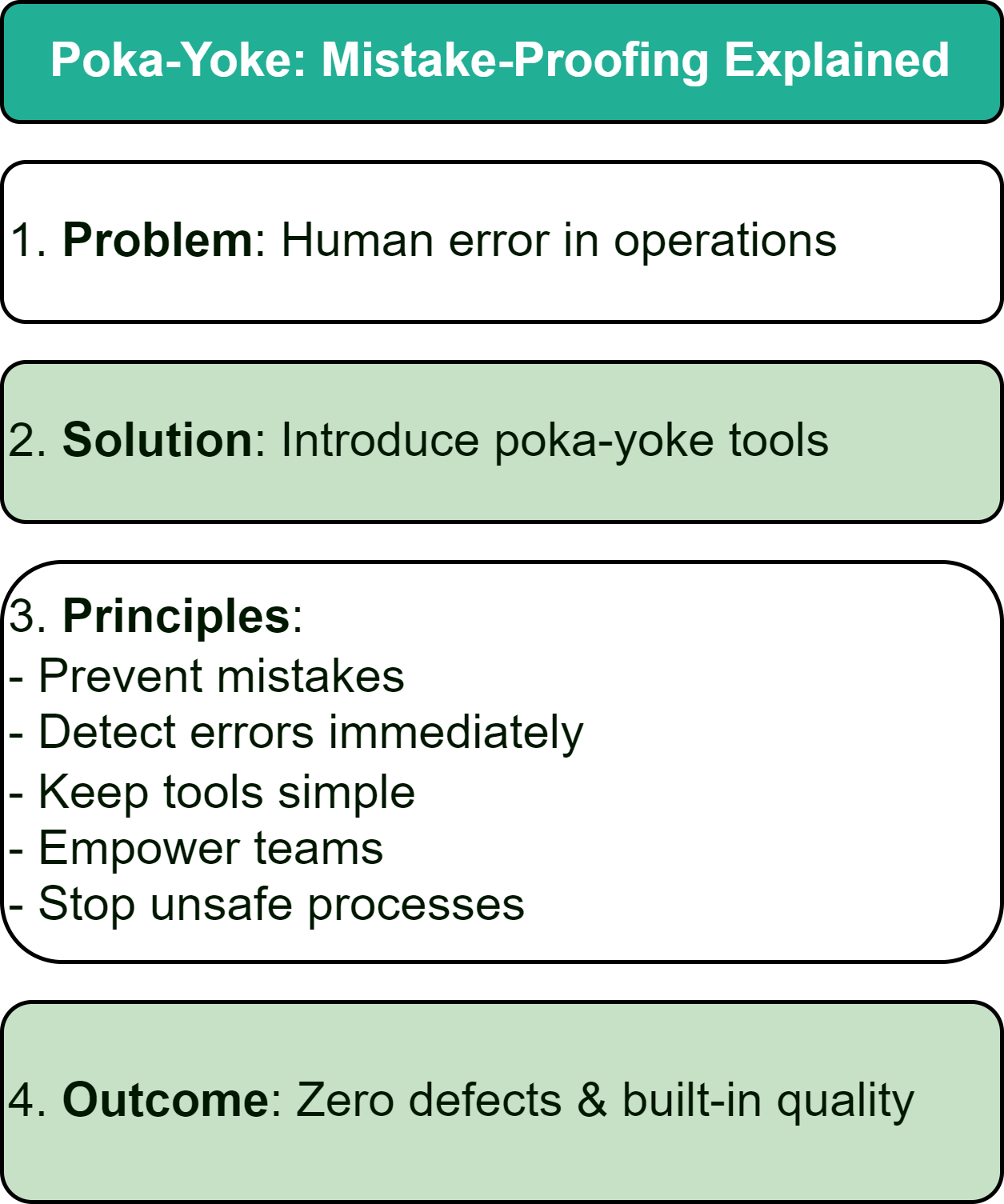
Poka-yoke is a Lean Six Sigma tool developed by Shigeo Shingo in the Toyota Production System to prevent human error in manufacturing. The goal is zero defects through simple, built-in process modifications.
Key principles include:
Error prevention by design: Parts or steps are configured so mistakes are physically impossible.
Immediate error detection: If a mistake occurs, it’s identified instantly through sensors or signals.
Low-cost simplicity: Devices are often physical stops, limit switches, or color codes. Affordable and user-friendly.
Jidoka (built-in quality): Automation halts the process if conditions are unsafe or incorrect.
Continuous improvement culture: Workers are empowered to identify and solve error risks.
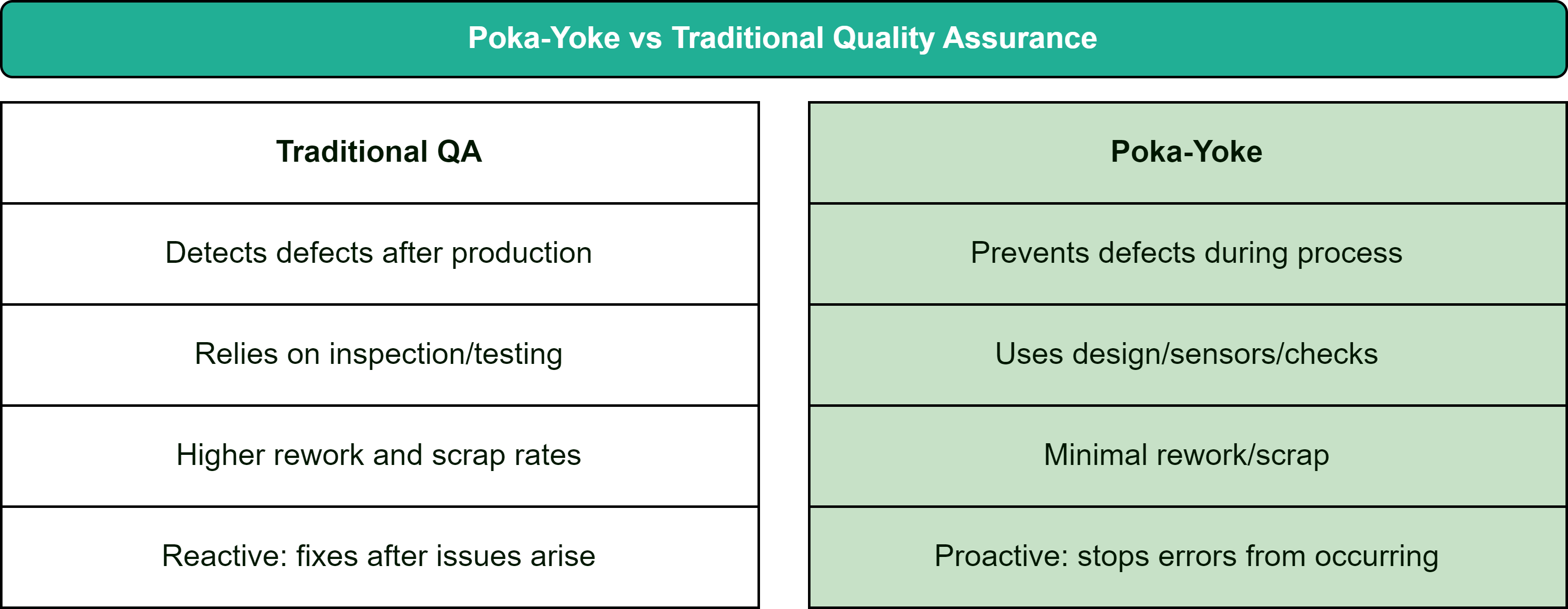
Poka-yoke ensures quality is built into the process and not inspected after the fact.
3. Why poka-yoke matters for environmental sustainability
Errors reduce product quality and they also waste materials, water, energy, and can even cause pollution. Poka-yoke eliminates these problems at their root.

Key environmental benefits:
Reduced scrap and solid waste: Defects often lead to scrapped material. Poka-yoke prevents these errors and avoids waste disposal.
Fewer rework emissions: Reprocessing defective items consumes extra energy. Avoiding rework lowers carbon emissions.
Pollution prevention: Mistakes in process setups can cause leaks, spills, or unauthorized discharges. Error-proofing mitigates this risk.
Resource efficiency: Preventing overuse of raw materials, electricity, or water conserves valuable inputs.
Cleaner, leaner operations: Lean waste equals environmental waste. Streamlined, error-free processes are more sustainable.
In short, preventing errors means preventing waste of materials and energy.
4. Industry case insights: poka-yoke in action
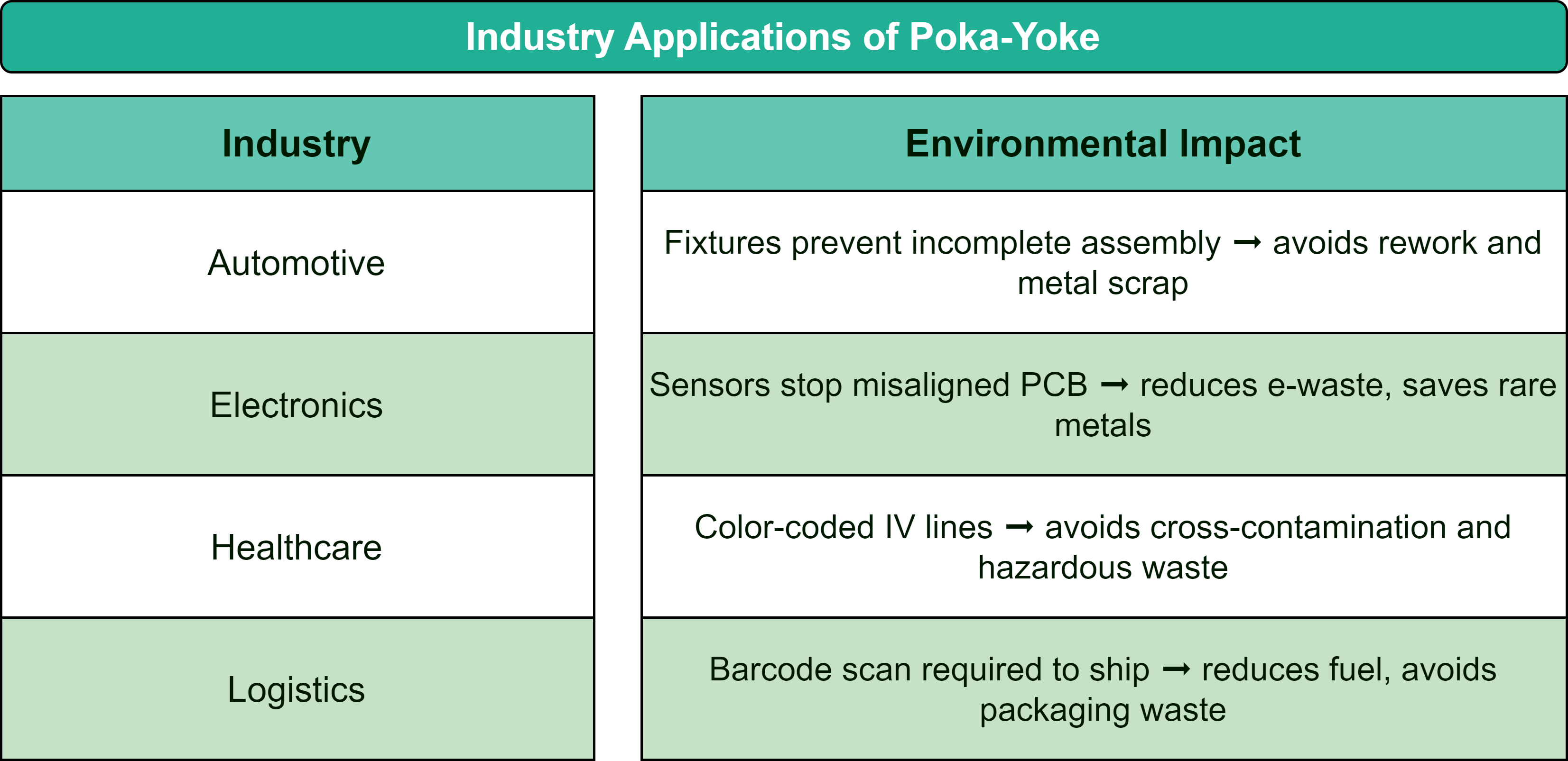
These examples show poka-yoke's flexibility: from physical devices to digital checks, all serve to reduce environmental impact through error prevention. Here are some more Poka-Yoke examples:
Automotive: Pokayoke Torque Wrench
Electronics: 3 Examples of Poka-Yoke in Electronics Manufacturing
Healthcare: Mistake-proofing healthcare: Why stopping processes may be a good start
Logistics: Barcode Solutions for Logistics
5. Aligning poka-yoke with ESRS environmental standards
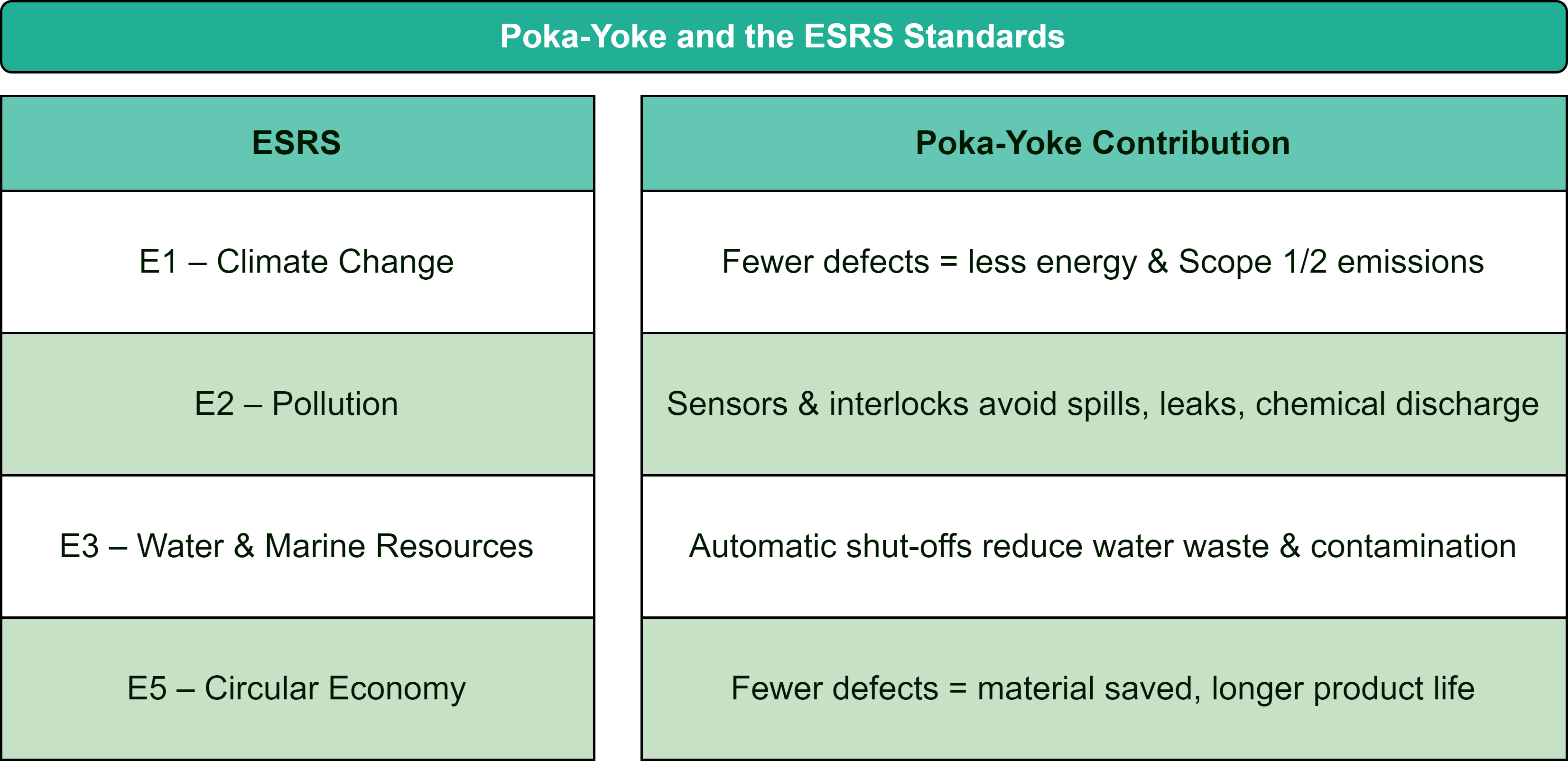
Poka-yoke contributes to compliance and performance under multiple ESRS standards:
ESRS E1 (Climate Change): Mistake-proofing reduces energy-intensive rework and lowers Scope 1 and 2 emissions. For example, a 10% reduction in scrap lowers operational carbon.
ESRS E2 (Pollution): Preventing spills and emissions through interlocks and sensors supports zero-pollution objectives.
ESRS E3 (Water and Marine Resources): Automatic shut-offs and process checklists prevent water overuse and contamination.
ESRS E5 (Circular Economy): Reducing defects conserves materials and extends product life—key to circular design and resource decoupling.
6. How to apply poka-yoke in your own business
Applying poka-yoke doesn’t require sophisticated technology or huge capital investments. Here’s a step-by-step approach to help you get started:
