


Last updated: 07/27/2025
1. Introduction
Environmental, Social, and Governance (ESG) policies have become essential instruments for aligning business strategy with ethical responsibility and long-term value creation. A well-designed ESG policy addresses reputational risk, regulatory compliance and it reflects how a company understands its role in society and the economy.
An ESG policy formally defines an organization’s vision, values, and commitments around sustainability. It articulates how the company will manage issues ranging from carbon emissions and labor rights to data privacy and board accountability.
Corporate ESG policies are being shaped by global frameworks such as the United Nations Global Compact (UNGC), OECD Guidelines, ISO 26000, and the Corporate Sustainability Reporting Directive (CSRD). These standards emphasize stakeholder engagement, measurable goals, continuous improvement, and alignment with global sustainability goals.
This guide will walk you through:
✅ What a high-quality ESG policy consists of and why each element matters
✅ How to structure and develop an ESG policy step by step
✅ Which international frameworks provide guidance
✅ Examples of ESG policies in global companies
By the end of this guide, you’ll understand how to create an ESG policy.

2. Defining a strong ESG policy: core components and expectations
A strong ESG policy serves as a roadmap for how a company addresses its environmental, social, and governance responsibilities. It sets out clear values, defines areas of focus, and connects sustainability goals with business strategy. This section outlines the key building blocks of an effective ESG policy, from defining scope and setting measurable goals to ensuring accountability and continuous improvement.
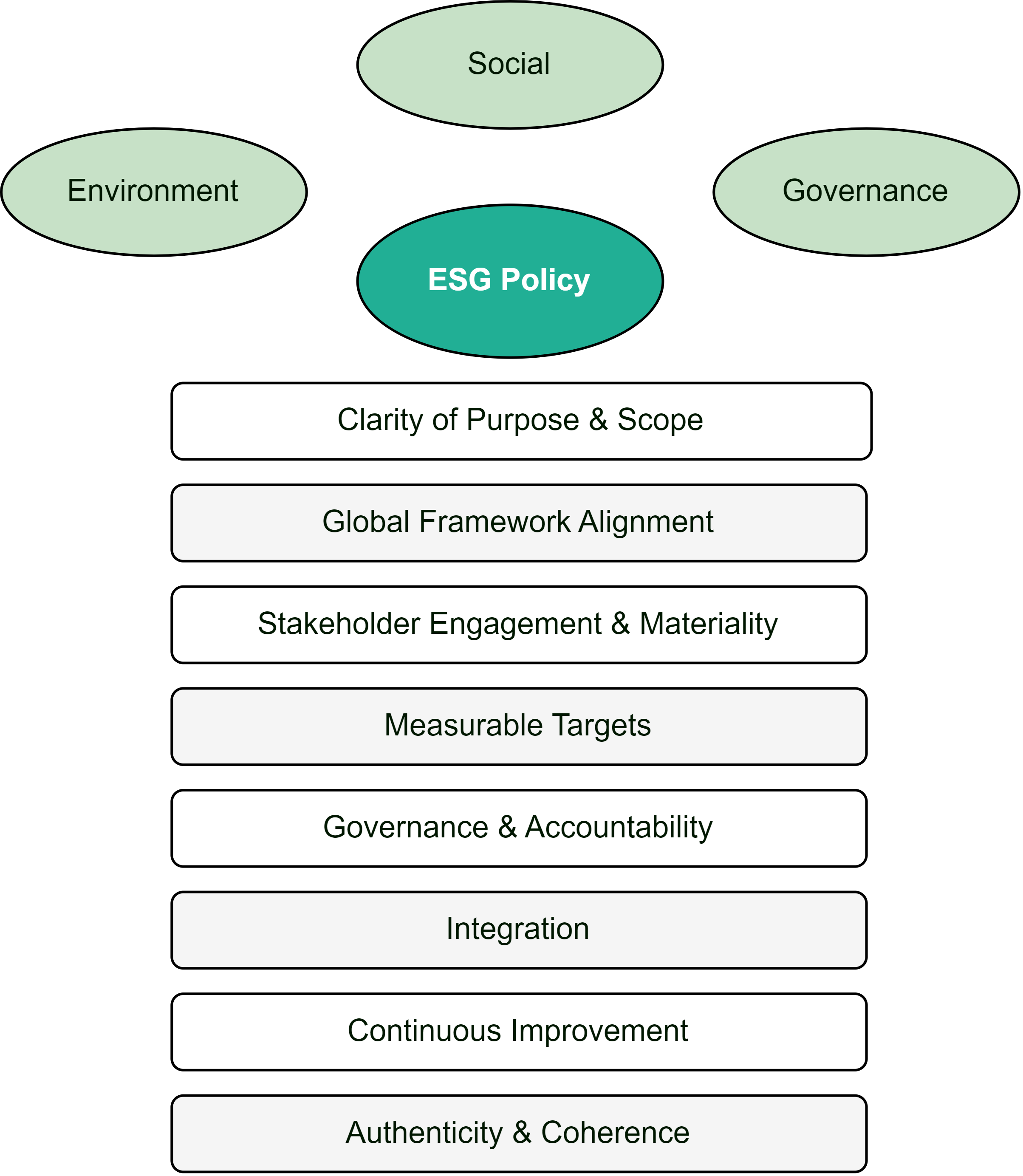
Clarity of purpose and scope
An effective ESG policy is grounded in a clear expression of values and purpose. It should define the company’s core commitments, such as reducing emissions, protecting human rights, or promoting fair business practices. The policy should align with the mission and strategic goals.
A helpful benchmark here is ISO 26000, an international standard developed to guide organizations on social responsibility. ISO 26000 outlines key areas companies should cover in their sustainability efforts such as:
governance,
human rights,
labor practices,
environmental protection,
fair operating practices,
consumer issues,
and community engagement
Policies should make explicit what topics are covered and ensure that no essential issue is left out.
Alignment with global frameworks
To build credibility, companies often base their ESG policies on widely accepted international standards.
The UN Global Compact offers Ten Principles covering human rights, labor, the environment, and anti-corruption. Companies that commit to the Compact are expected to integrate these principles into their strategies and operations. Read more here.
The OECD Guidelines for Multinational Enterprises provide recommendations on how businesses should behave responsibly across areas like labor, environment, and ethics. Read more here.
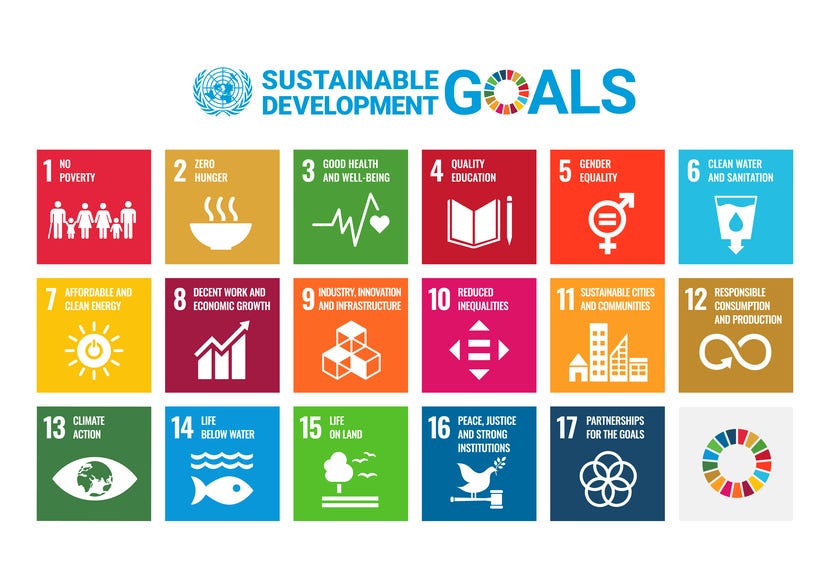
Some companies also link their ESG policies to the United Nations Sustainable Development Goals (SDGs). Which is a set of 17 global goals including climate action, gender equality, and decent work. This helps show how their efforts contribute to broader global priorities.
Stakeholder engagement and materiality
An effective ESG policy reflects not only what the company thinks is important, but also what matters to people affected by its actions, its stakeholders. These include employees, customers, investors, suppliers, local communities, and others.
To determine what’s most relevant, companies conduct a materiality assessment. This is a process that identifies the ESG issues that are most significant for both the company and its stakeholders. Standards like the Global Reporting Initiative (GRI) and ISO 26000 recommend doing this.

Measurable targets and performance metrics
A good ESG policy turns goals into action. Strong policies include measurable targets, like cutting greenhouse gas emissions by a certain percentage, setting diversity goals, or committing funds to local communities.
This approach supports transparency and accountability. For instance, a policy might say:
“We aim to reduce greenhouse gas emissions by 30% by 2030, using 2020 as a baseline.”
ISO 26000 also emphasizes the importance of tracking progress and continuously improving based on what the company learns.
Governance and accountability structures
Effective ESG policies clearly assign responsibility. Some companies give ESG oversight to their board or a sustainability committee, often supported by a Chief Sustainability Officer. Some firms link executive pay to ESG goals like emissions or diversity.
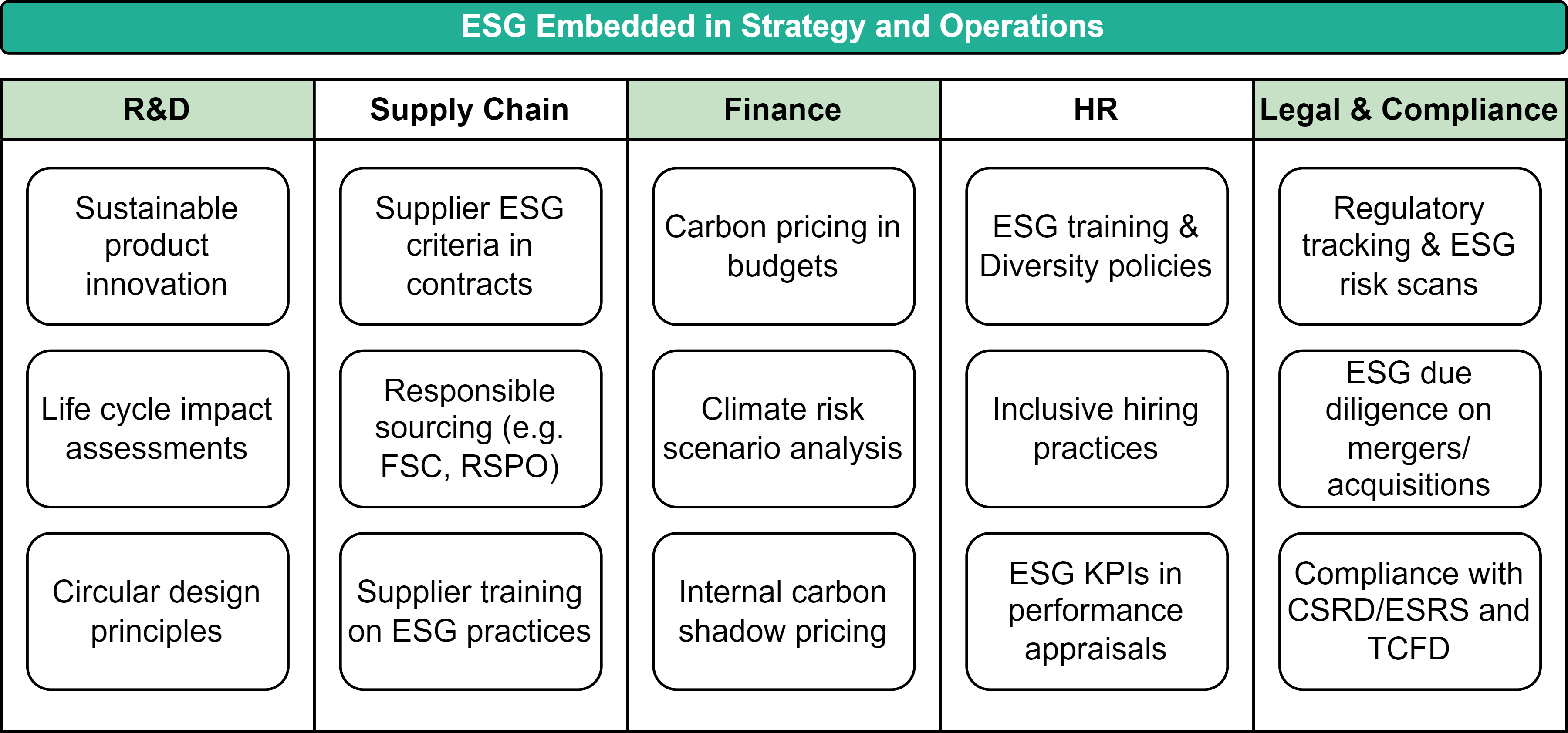
Integration into strategy and operations
Strong policies are embedded. It is important to align ESG policy with business planning, R&D, supply-chain decisions, and risk management.
For example, a company might require all new capital projects to pass an ESG risk assessment, or embed ESG criteria into supplier contracts. Training employees and integrating ESG into company culture is essential for implementation.
Continuous improvement and regular review
Sustainability is a moving target. Reviewing ESG policies every one to two years, using performance results and new insights to raise the company’s level of ambition.
ISO’s Plan–Do–Check–Act (PDCA) model also supports this idea. It encourages organizations to:
Plan (set goals),
Do (implement them),
Check (measure results),
Act (improve based on findings).
This cycle keeps the policy relevant and effective over time.
Authenticity and coherence
A company’s ESG policy must reflect what it does. Companies should avoid “policy–practice decoupling”: companies publish impressive-sounding policies but don’t follow through.
To avoid this, ESG policies should:
Match the company’s real actions,
Align with other internal rules (like codes of conduct or HR policies),
Be consistent with public statements.
The UN Global Compact emphasizes that performance must be balanced across all ESG areas. For example, strong climate performance does not excuse poor treatment of workers. Sustainability must be authentic and holistic.
3. Step-by-step: how to build your ESG policy
Designing an ESG policy involves a structured process and adherence to guidance from global frameworks. Below is a consolidated step-by-step approach, reflecting common recommendations from standards and experts.
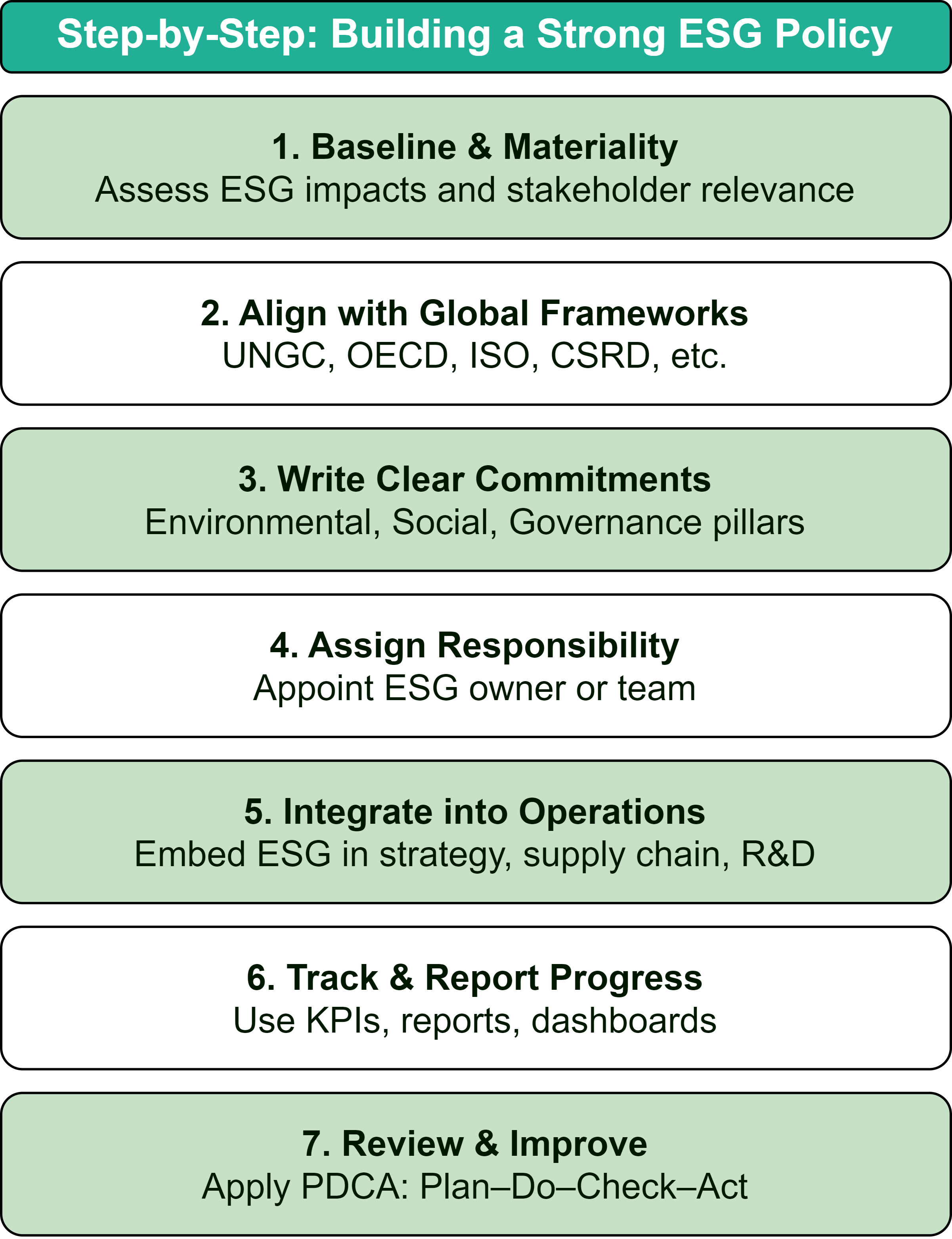
Baseline assessment and materiality
Start with a quick review of your environmental and social impacts. What ESG topics are most relevant to your business and stakeholders? These are your “material” issues. You can use basic stakeholder feedback, regulatory checks, or peer comparisons to get started. This ensures your policy focuses on what really counts.company’s context.Use global frameworks as a guide
Align your policy with trusted standards like:
The UN Global Compact (human rights, labor, environment, anti-corruption)
The OECD Guidelines (responsible business conduct)
You don’t need to follow everything, but referencing these frameworks adds credibility and helps structure your commitments.
Write clear commitments and goals
Once you’ve identified your key ESG topics, turn them into clear, structured commitments. A good way to do this is by organizing your policy into three main pillars:Environment – Focus on areas like reducing greenhouse gas emissions, minimizing waste, conserving water, or switching to renewable energy.
Social – Cover issues such as fair labor practices, workplace diversity, employee well-being, community engagement, or respecting human rights across your supply chain.
Governance – Include topics like anti-corruption, ethical business conduct, data privacy, and transparency in decision-making.
For each area, describe:
What you want to achieve
How you plan to get there
When you expect to reach your goals
Try to make your commitments measurable and time-bound when possible. For example:
✅ “We aim to cut energy use by 20% by 2028 compared to our 2022 baseline.”
🚫 Avoid vague language like: “We will be more energy efficient.”Even if you're just starting out, setting small but clear goals shows intent and helps track progress over time.
Assign responsibility and make it part of daily work
Say who is responsible. It could be a board committee, a sustainability manager, or the business owner.Make sure ESG isn’t just on paper. Embed it into decisions, like choosing suppliers, launching products, or planning budgets. For small companies, this might mean training staff or updating key processes.
Stay connected to stakeholders
Good policies reflect what people care about. Make space for input from employees, customers, or communities and revisit it regularly. Even a simple annual survey or team discussion helps keep the policy relevant.
Track progress and report
Pick a few key metrics (like emissions, diversity, or safety) and check progress regularly. If possible, report your ESG efforts publicly. For example, on your website, in a short PDF, or through a sustainability report.
Review and improve
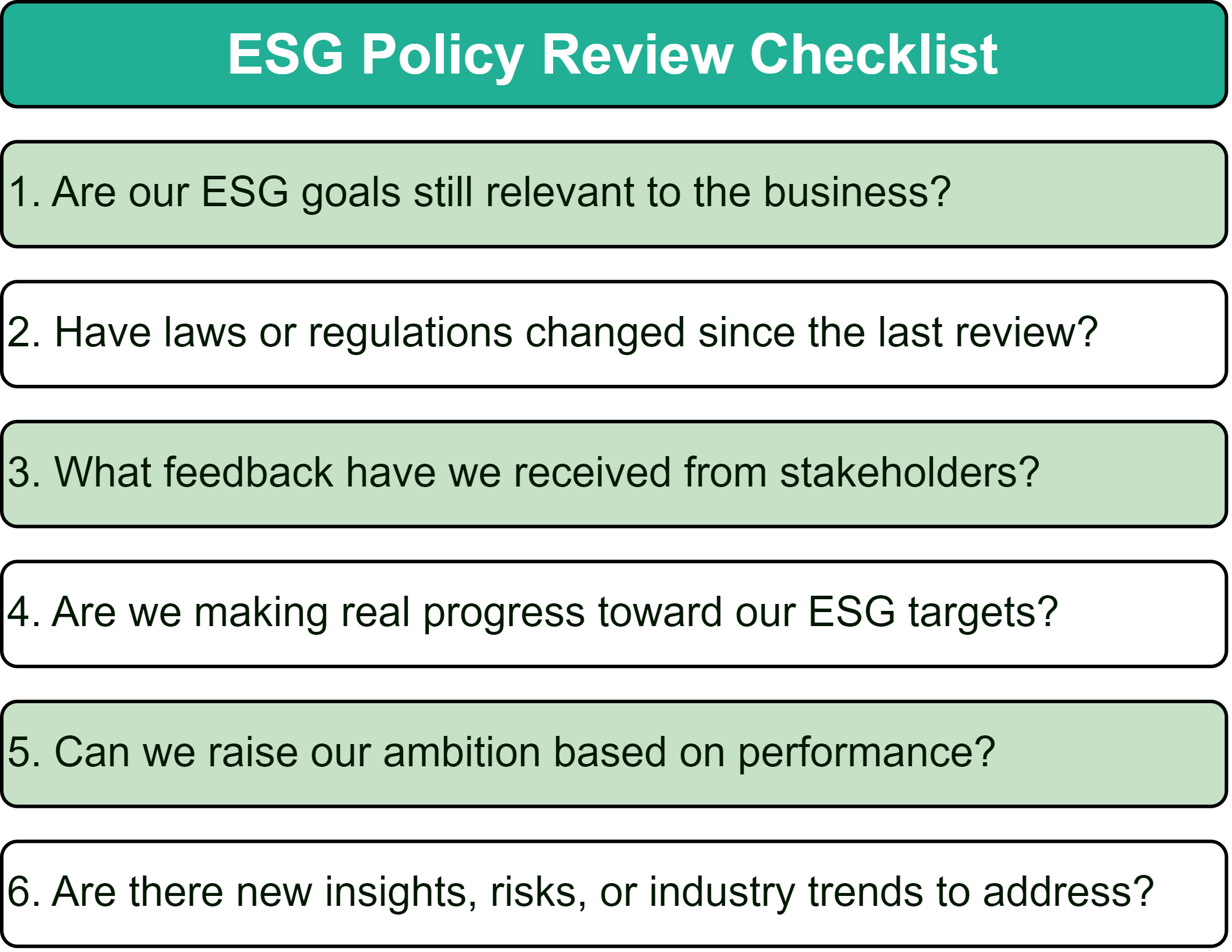
Plan to review your policy at least every one to two years. Use this time to check: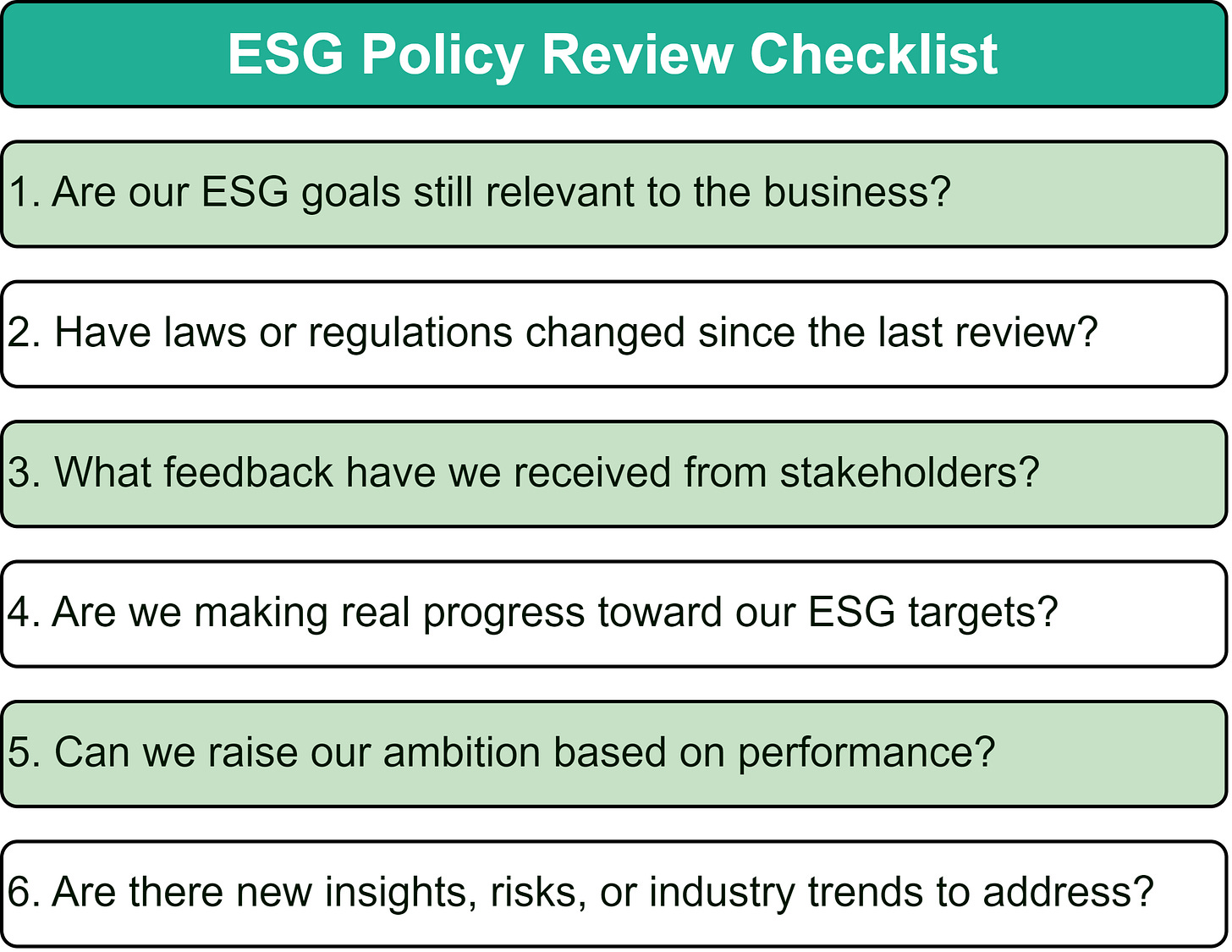
This review process helps you raise your ambition as your company learns and evolves. For example, if you’ve already met your original goal for waste reduction, you might set a higher target next time.
Also, look for ways to improve based on new data or best practices from your industry. ESG expectations are always changing, so a strong policy should stay flexible and keep improving over time.
![[HOW] ESRS: How to identify and engage stakeholders?](https://substackcdn.com/image/fetch/$s_!VFiH!,w_140,h_140,c_fill,f_webp,q_auto:good,fl_progressive:steep,g_auto/https%3A%2F%2Fsubstack-post-media.s3.amazonaws.com%2Fpublic%2Fimages%2F3a186b58-7611-43ed-8a20-3ffa33c4fb17_1939x1939.png)
4. Frameworks and standards shaping ESG policies
Strong ESG policies often follow well-known global standards. These frameworks help companies shape responsible, credible, and consistent policies.
