


1. Introduction
Energy use sits at the heart of every company’s climate footprint.
E1-7 asks you to show how much energy your company consumes, where it comes from, and how it is changing over time.
This disclosure links directly to your emissions reporting (E1-8).
By tracking and reporting energy mix clearly, you demonstrate how your business is reducing its reliance on fossil fuels and moving toward cleaner energy sources.
I will briefly explain the requirements for companies to disclose their consumption and mix.
More elaborate articles are available, which can be found below.

2. What is an energy mix?
Your energy mix shows where your energy comes from.
It’s the combination of all energy sources your company uses to power its activities — such as electricity, heating, fuel for vehicles, or production energy.
Think of it as your company’s “energy recipe”:
Fossil fuels (like coal, oil, or natural gas) are the high-carbon ingredients.
Renewables (like solar, wind, hydro, or biomass) are the clean ingredients.
Nuclear energy is sometimes included as a low-carbon but non-renewable option.
By comparing how much energy comes from each source, you can see how dependent your business still is on fossil fuels and how quickly it is moving toward cleaner energy.
A company with a renewable-heavy mix contributes less to greenhouse gas emissions and is better prepared for future carbon rules.
A company with a fossil-heavy mix faces higher climate risks and potential costs from rising carbon prices.
The ESRS does not have a definition for energy mix.
3. ESRS E1-7 at a glance
E1-7 requires you to disclose information on:
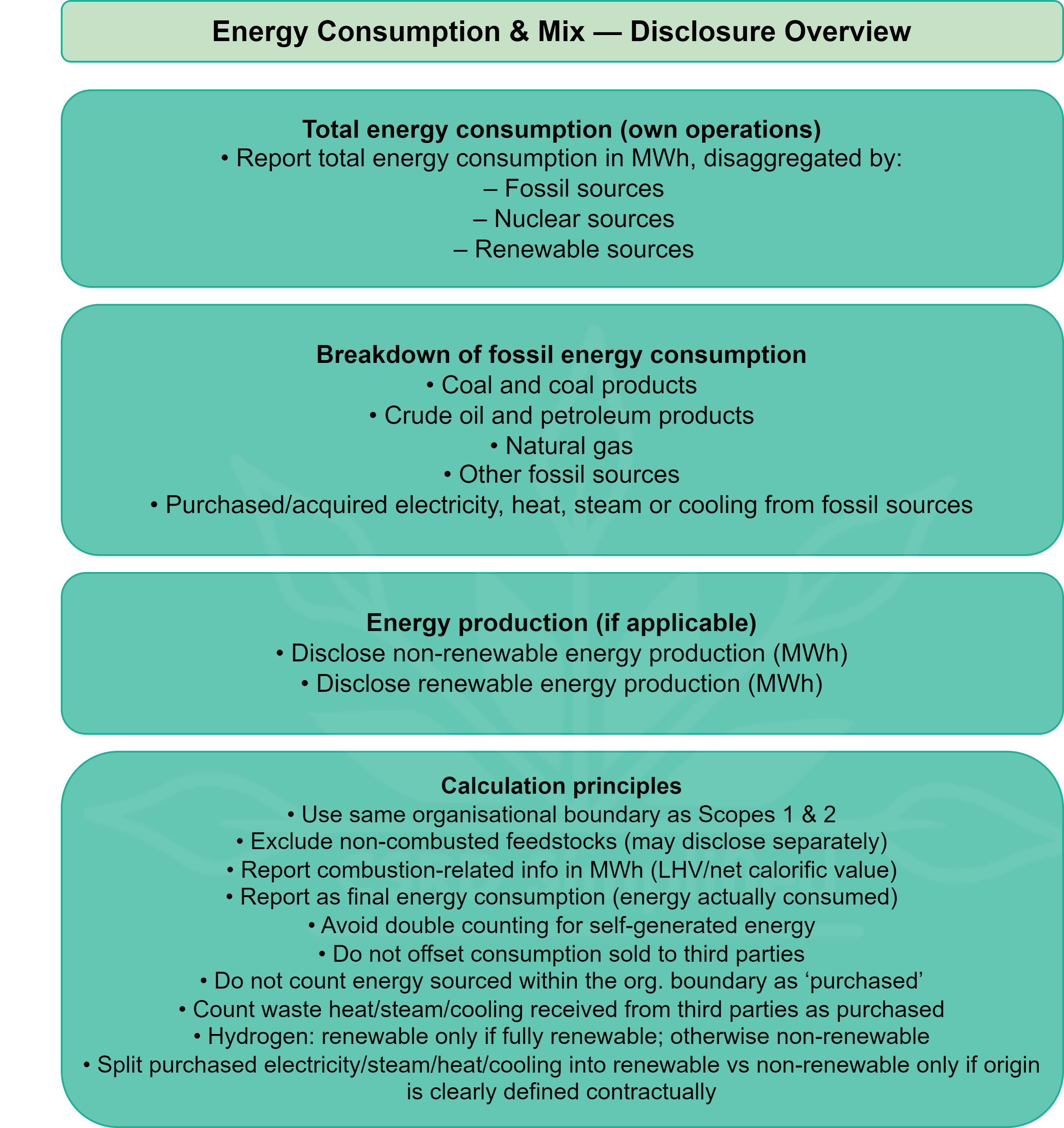
Read more about the energy mix here:
![[BREAKDOWN] E1-7: Understanding the corporate energy mix](https://substackcdn.com/image/fetch/$s_!rTGI!,w_140,h_140,c_fill,f_webp,q_auto:good,fl_progressive:steep,g_auto/https%3A%2F%2Fsubstack-post-media.s3.amazonaws.com%2Fpublic%2Fimages%2F20657086-78d5-4c2d-948b-8af47f39625e_2048x2048.jpeg)
4. How E1-7 links to the rest of ESRS E1
E1-7 provides the energy data that feeds into E1-8 (GHG emissions).
It also connects to E1-5 (actions) — especially those related to efficiency, electrification, and renewable sourcing.
Your progress here supports your targets (E1-6) and overall transition plan (E1-1).
Together, these disclosures let readers see what powers your operations today and how that’s changing.
5. Bottom line
E1-7 turns energy use into a clear climate performance indicator.
To comply and add value:
Measure and disclose total energy consumption with clear fossil-versus-renewable breakdowns.
Apply consistent boundaries with your emissions reporting.
Track improvement — show trends in efficiency and renewable share year over year.
Done well, this disclosure gives an honest view of how your company is moving from high-carbon energy toward cleaner, more resilient operations.