


1. Introduction
Identifying and engaging stakeholders is important in sustainability reporting, especially under the European Sustainability Reporting Standards (ESRS). Knowing who your stakeholders are and engaging with them is needed to create meaningful sustainability reports. Who stakeholders are and why to engage them, is covered in another article. This guide will walk you through the methodology to identify and engage stakeholders.

2. Identifying stakeholders
Before you start identifying the stakeholders, it is important to understand what stakeholders under the CSRD are. Stakeholders are individuals or groups either affected by or affecting the company's operations. They fall into two main categories:
Affected stakeholders: Employees, suppliers, customers, local communities, public authorities, and so on.
Users of sustainability statements: Investors, lenders, business partners, trade unions, NGOs, government bodies, and so on.
It’s important to note that stakeholders can belong to one or both of these categories.
To begin identifying stakeholders, start by reviewing existing sources within your organization:
Internal documents: Review company reports, meeting minutes, and project documents.
Employee input: Gather insights from employees across different departments.
Previous engagements: Look at records from past stakeholder engagements or consultations.
Industry benchmarks: Consider stakeholders identified by similar companies or industry reports.
These sources might yield an initial list of stakeholders.. To create a more comprehensive list you can use the following stakeholder groups:
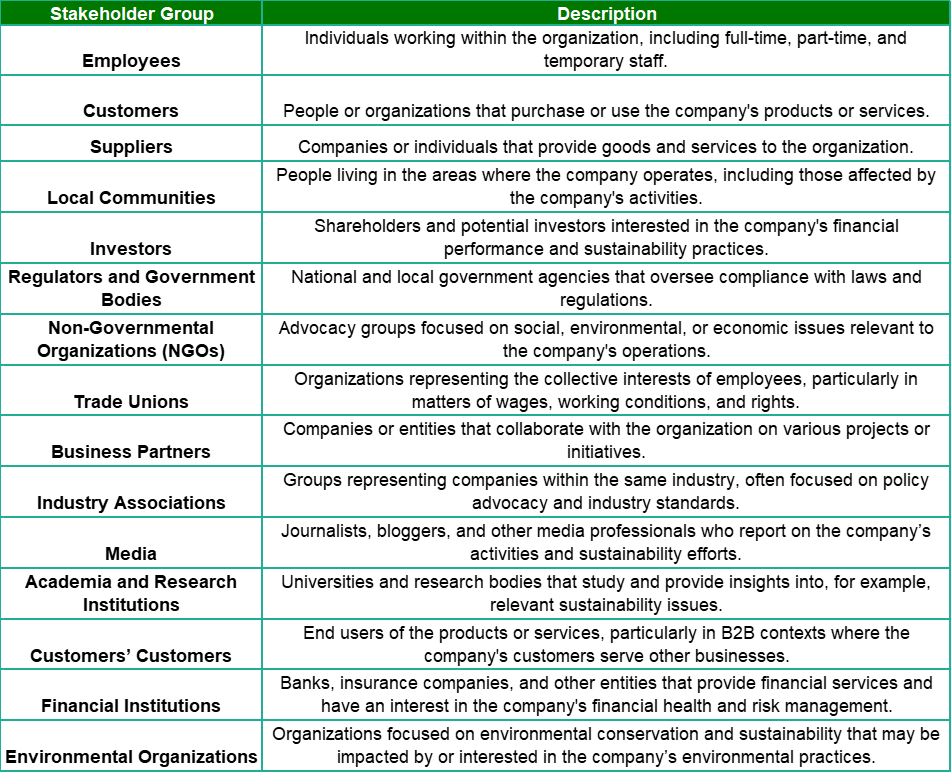
You may need to add or remove several stakeholder groups based on the specific context of your organization. Once you have all stakeholder groups, it is time to identify stakeholders within these groups.
Identifying every single stakeholder can be overwhelming and unnecessary. Instead, it would help if you focused on the most important stakeholders in each group. To determine the most important stakeholders, consider the following aspects:
Impact: The degree to which the stakeholder is affected by or can affect the company's activities.
Dependency: The extent to which the stakeholder depends on the company for their wellbeing or operations.
Responsibility: The level of responsibility the company has towards the stakeholder.
Tension: The potential for conflict or disagreement with the stakeholder.
Influence: The power or influence the stakeholder has over the company’s operations or decision-making.
