


1. Introduction
Businesses operate in environments where efficiency, speed, and quality are critical to success. To remain competitive, companies must adopt frameworks that address these priorities while driving innovation and customer satisfaction. One such framework is Lean Six Sigma, which is a methodology that combines the waste-reducing principles of Lean with the precision-focused processes of Six Sigma. This article explores the concepts of Lean, Six Sigma, and their combined power to achieve a more circular economy.

2. What is Lean?
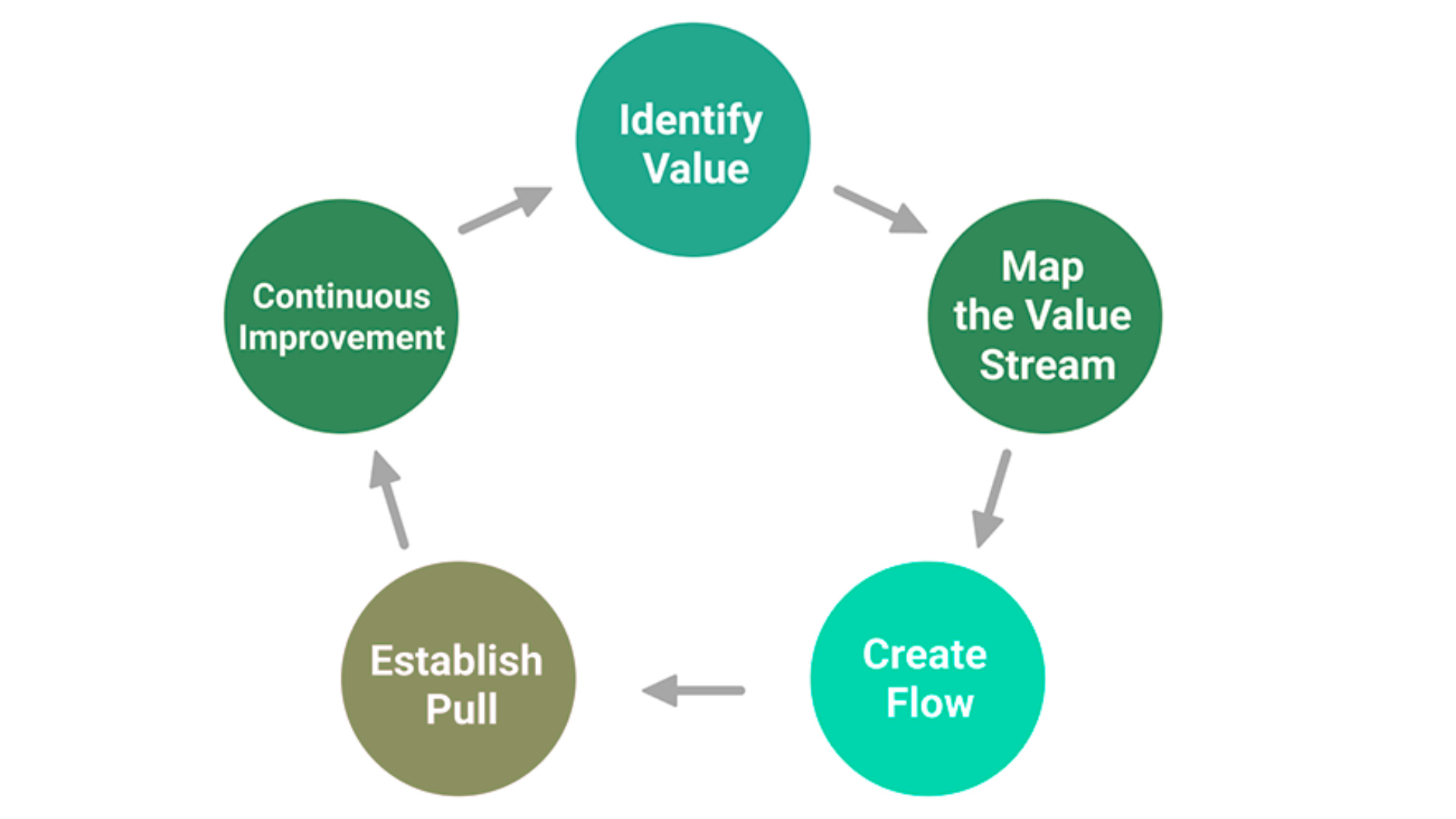
Lean is a methodology focused on improving speed and reducing waste across operational processes. It emphasizes the flow of value to the customer, ensuring that every step in the process contributes to the final product or service. Lean principles highlight the following core actions:
Identifying value: Understanding what the customer values most.
Mapping the value stream: Visualizing the end-to-end workflow to identify wasteful steps.
Creating flow: Ensuring processes move smoothly without bottlenecks.
Implementing pull systems: Aligning production with customer demand to prevent overproduction.
Striving for continuous improvement: Cultivating a mindset of ongoing refinement.
Lean tools like value stream mapping and Kaizen events enable organizations to identify inefficiencies and take immediate corrective actions.
3. What is Six Sigma?
Six Sigma is a data-driven methodology designed to improve quality by minimizing process variation and reducing defects. Originating at Motorola, Six Sigma uses statistical tools to achieve near-perfection in operational processes, which is defined as no more than 3.4 defects per million opportunities (6 sigma on a normal distribution).
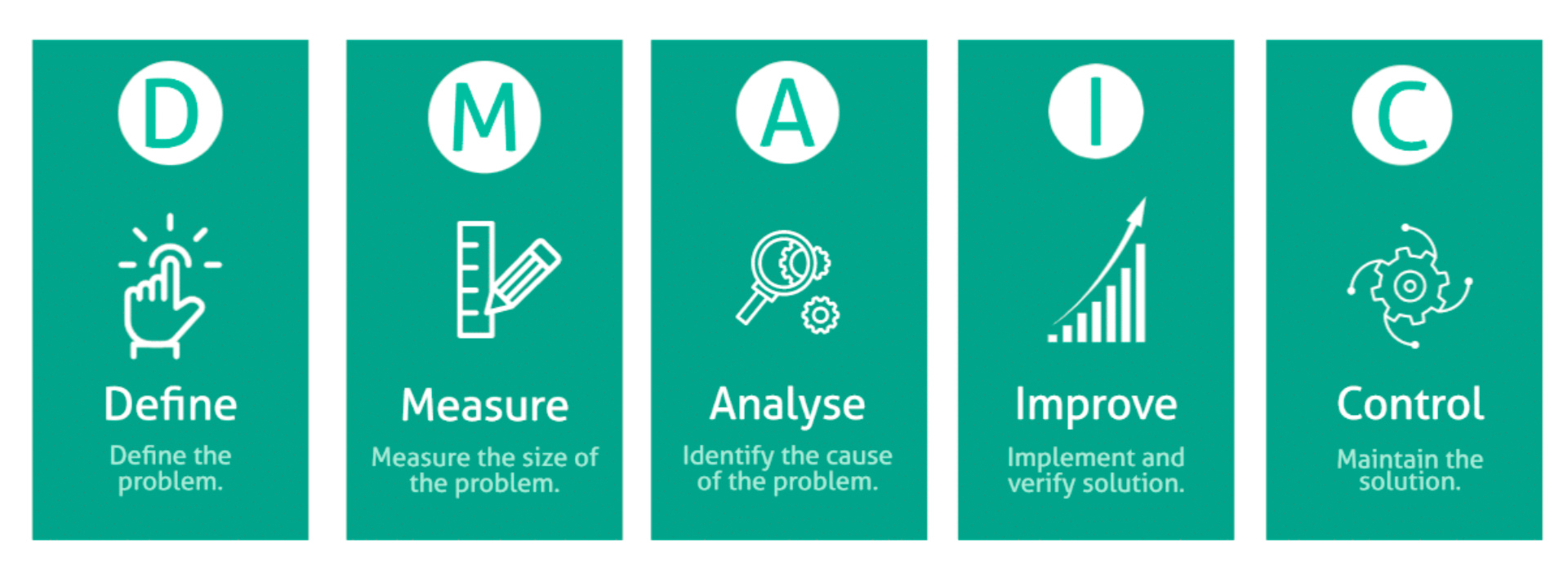
The methodology follows a structured problem-solving approach known as DMAIC:
Define: Establish the scope and objectives of a project.
Measure: Quantify current performance and identify gaps.
Analyze: Determine the root causes of issues.
Improve: Develop and implement targeted solutions.
Control: Monitor outcomes to sustain improvements.
Six Sigma’s strength lies in its rigorous use of data and its ability to quantify the financial impact of quality improvements.
4. What is Lean Six Sigma?
Lean Six Sigma merges the principles of Lean and Six Sigma to create a methodology that maximizes efficiency and quality simultaneously. While Lean addresses waste and process flow, Six Sigma ensures statistical control and precision. Together, they:
Streamline operations by removing wasteful steps.
Ensure consistency and reliability through data-driven decision-making.
Align operational improvements with customer needs and business objectives.
The combination of Lean and Six Sigma is particularly powerful because it addresses both speed and accuracy, which are key drivers of organizational success in competitive markets.
5. How can Lean Six Sigma help your business?
The benefits of Lean Six Sigma extend across industries and operational contexts. Key advantages include:
🛠️ Improved efficiency: By identifying bottlenecks and eliminating unnecessary steps, businesses can reduce lead times and optimize resource use.
🎯 Enhanced quality: Data-driven solutions minimize variability, leading to consistent product and service quality.
💰 Cost savings: Reduced waste and defects directly translate to lower operational costs.
😊 Customer satisfaction: Faster delivery times and higher-quality outputs improve customer experiences and loyalty.
6. Lean Six Sigma and the Circular Economy
Lean Six Sigma offers a range of tools and methodologies that align closely with the goals of the circular economy (CE). The CE model emphasizes reducing waste, optimizing resource use, and extending the lifecycle of products and materials. By integrating Lean Six Sigma principles, businesses can make significant strides in adopting circular practices. Here are some key contributions:
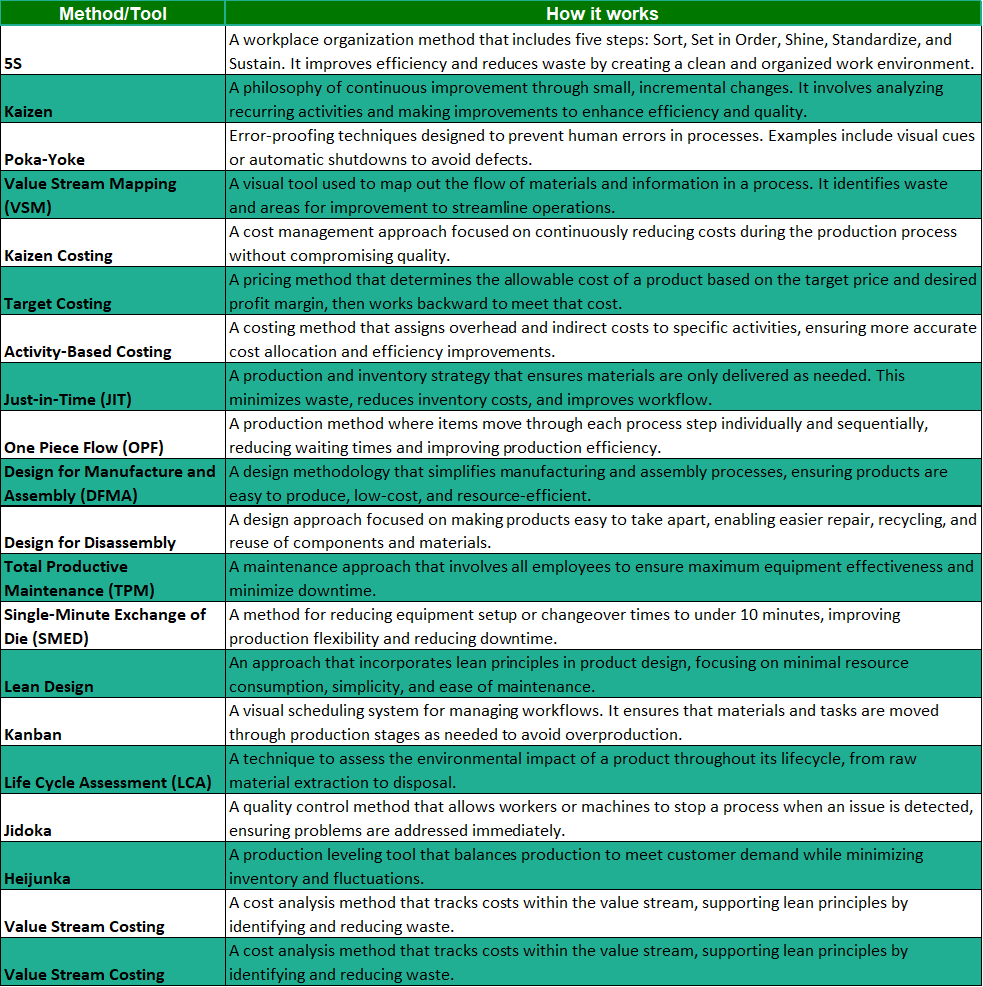
Reducing waste generation: Tools such as 5S, Kaizen, Poka-Yoke, and Value Stream Mapping (VSM) help identify and eliminate waste in production processes.
Cost reduction: Techniques like Kaizen costing, target costing, and activity-based costing ensure efficient resource allocation and reduced production costs.
Eliminating all forms of waste: Just-in-Time (JIT), 5S, Kaizen, and Poka-Yoke address inefficiencies and ensure processes are streamlined.
Increasing production efficiency: Methods such as One Piece Flow (OPF), 5S, and VSM improve process flow and reduce downtime.
Reusing resources: Design for Manufacture and Assembly (DFMA) and Design for Disassembly facilitate resource reuse and material recovery.
Promoting savings: Kaizen fosters a culture of continuous improvement and cost savings across operations.
Resource recovery: VSM enables businesses to map resource flows and identify opportunities for material recovery.
Preserving resource value: Techniques like Poka-Yoke and VSM help maintain the value of components and materials throughout their lifecycle.
Ensuring product longevity: Total Productive Maintenance (TPM), SMED, and Heijunka support extended product life cycles by ensuring operational reliability and reduced downtime.
Supporting recycling and regeneration: Lean tools such as SMED contribute to effective waste management and recycling practices.
Reducing raw material consumption: Lean Design and Kanban minimize material use through efficient planning and production.
Encouraging repair and refurbishment: DFMA and Design for Disassembly enable products to be easily repaired or refurbished.
Maximizing resource value: Kaizen and activity-based costing ensure raw materials and components are used to their fullest potential.
Driving innovation: Kaizen and VSM foster the development of innovative solutions to enhance sustainability.
Extending product life cycles: Life Cycle Assessment (LCA) and Jidoka promote product durability and environmental conservation.
Improving environmental quality: Lean practices such as 5S, Lean Design, and Poka-Yoke reduce environmental impact while optimizing resource use.
Here is an overview of the different methods and tools:
The circular economy demands systemic change, and Lean Six Sigma provides the tools and framework needed to achieve it. Through efficient design, production, and waste management, Lean Six Sigma enables businesses to "close the loop" by:
Designing processes that reduce waste and increase material recovery.
Implementing resource-efficient practices that minimize environmental impact.
Encouraging collaboration across production, consumption, and waste management stages to maximize resource efficiency.
By integrating Lean Six Sigma with circular economy principles, businesses can improve their sustainability efforts while improving operational performance.
7. Conclusion
Lean Six Sigma is a methodology that offers businesses a dual focus on efficiency and quality. By combining the principles of Lean and Six Sigma, organizations can drive significant operational improvements while addressing modern challenges like sustainability and circularity. As demonstrated by real-world applications, this approach not only improves internal processes but also strengthens customer relationships and long-term profitability.
Relevant Resources
Combining Six Sigma Quality with Lean Production Production Speed