


1. Introduction
Biodiversity loss is moving quickly, undermining food security and supply-chain resilience.
The Kunming-Montreal Global Biodiversity Framework (GBF), adopted at CBD-COP 15 in December 2022, is the new global roadmap to halt and reverse nature loss through 2050.
The EU’s Corporate Sustainability Reporting Directive (CSRD) embeds the GBF in its biodiversity standard (ESRS E4), requiring firms to show how their strategies “align with the vision of the Kunming-Montreal Global Biodiversity Framework and its relevant goals and targets”.
Reading preview, you will learn:
✅ The GBF’s 2050 vision and 2030 mission
✅ The four long-term “Kunming-Montreal Global Goals”
✅ The structure of the 23 targets, including the flagship 30 × 30 commitment
✅ How ESRS E4 links corporate transition plans to the GBF
✅ Practical benefits and hurdles for companies as they operationalise the Framework
By the end, you will know why and how the GBF has become a reference point for ESG reporting and what your company can do with this framework.

2. Kunming-Montreal in a nutshell
2050 vision & 2030 mission
The Framework’s vision is “a world living in harmony with nature where by 2050 biodiversity is valued, conserved, restored and wisely used”. Its mission to 2030 is to “take urgent action to halt and reverse biodiversity loss to put nature on a path to recovery”.

Four global goals for 2050:
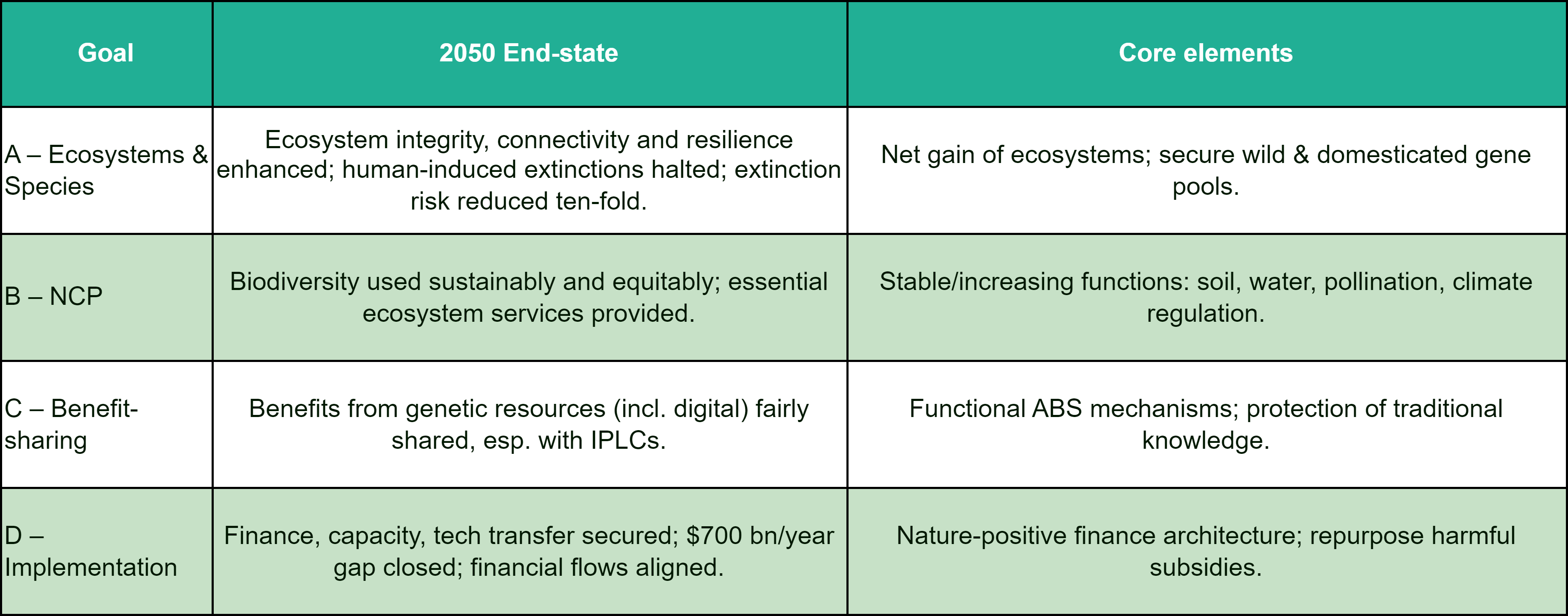
Twenty-three action targets for 2030
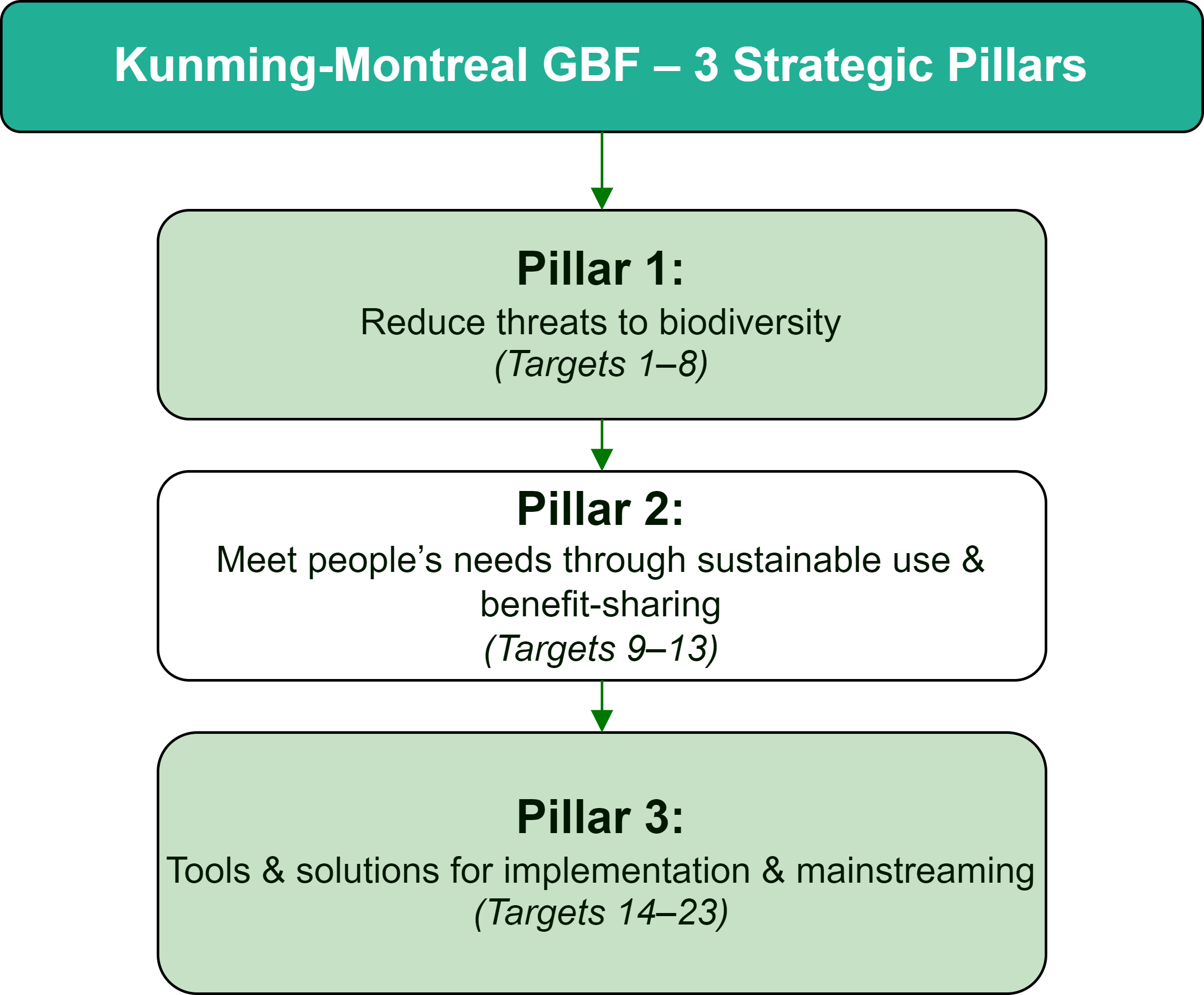
The Kunming-Montreal Global Biodiversity Framework includes 23 urgent targets that must be started now and finished by 2030 to help reach long-term biodiversity goals by 2050. These actions should align with global agreements and be adapted to each country’s needs and situation. The targets fall under three thematic pillars:
Reducing threats to biodiversity (Targets 1-8) – including Target 3 to conserve at least 30 % of land, inland waters and seas by 2030 (“30 × 30”).
Meeting people’s needs through sustainable use & benefit-sharing (Targets 9-13) – e.g., sustainable agriculture & forestry (Target 10).
Tools & solutions for implementation & mainstreaming (Targets 14-23) – notably Target 15 on mandatory biodiversity disclosure for large companies and financial institutions, and Target 18 to redirect US $500 bn per year in harmful subsidies.
For all 23 targets check out section H of the Kunming-Montreal Global Biodiversity Framework
