


1. Introduction
Microplastics are small plastic particles, smaller than 5 millimeters, that have quietly become one of the most pervasive pollutants in our environment. Whether deliberately added to products like cosmetics or unintentionally created through the breakdown of larger plastics, they are now everywhere: in the air we breathe, the water we drink, and even within our bodies. These tiny particles are creating big challenges, not just for ecosystems but for human health and the economy as well.
Let’s dive deeper into the world of microplastics to understand their origins, impacts, and what we can do to reduce their spread. We'll also explore how businesses are being held accountable through the Corporate Sustainability Reporting Directive (CSRD).

2. Substances Everywhere, Persistent Forever
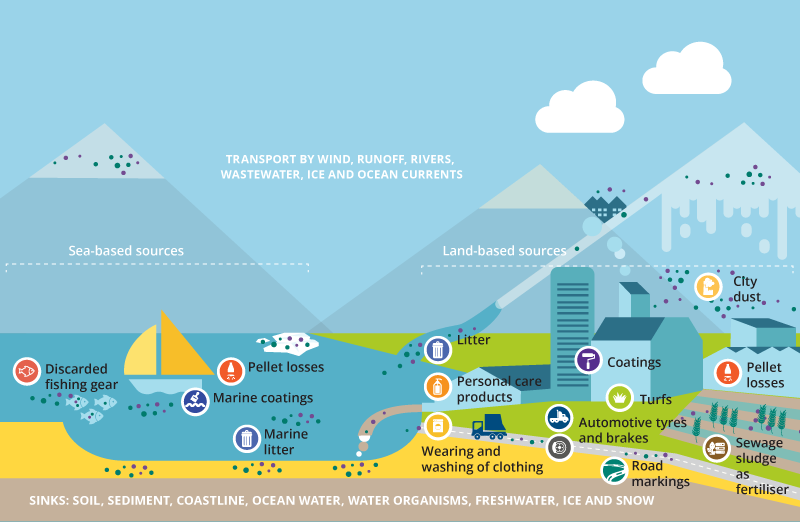
Microplastics originate from two main sources: primary microplastics and secondary microplastics:
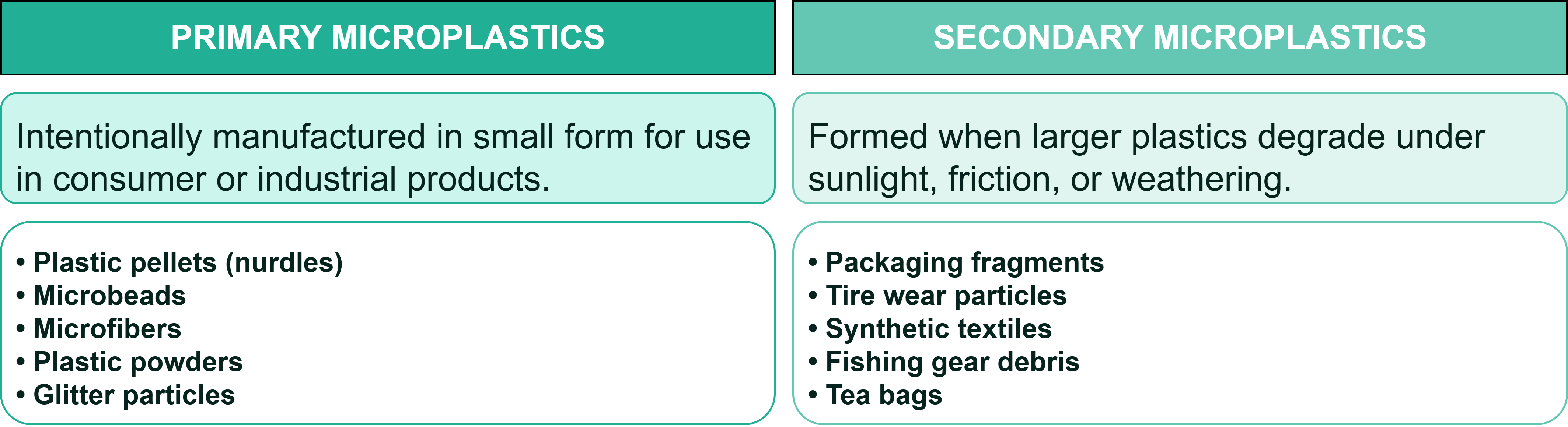
Microplastics are alarmingly persistent. Unlike organic materials, which decompose naturally, microplastics degrade very slowly, releasing increasingly smaller particles over decades or even centuries. Studies have shown that the majority of these particles accumulate in soils, roadside verges, and marine environments. However, they don’t remain there—they can travel through wind, water currents, and even food chains to reach new areas.
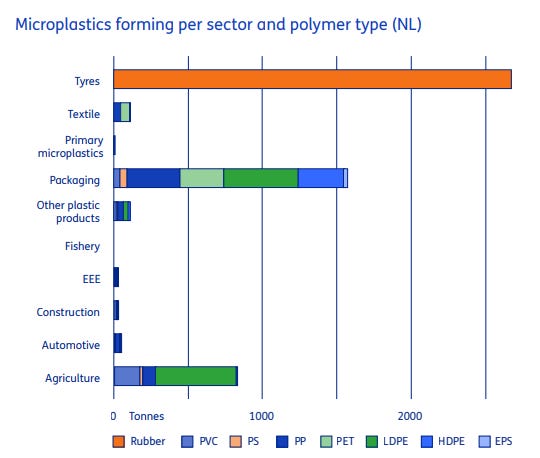
A systemic issue, microplastics are found in every stage of the plastic life cycle: production, use, disposal, and post-disposal. They represent a hidden consequence of the convenience plastics offer. For instance, packaging and tyre wear alone are responsible for a significant portion of microplastic pollution in the Netherlands.
3. Impacts on Health and the Environment
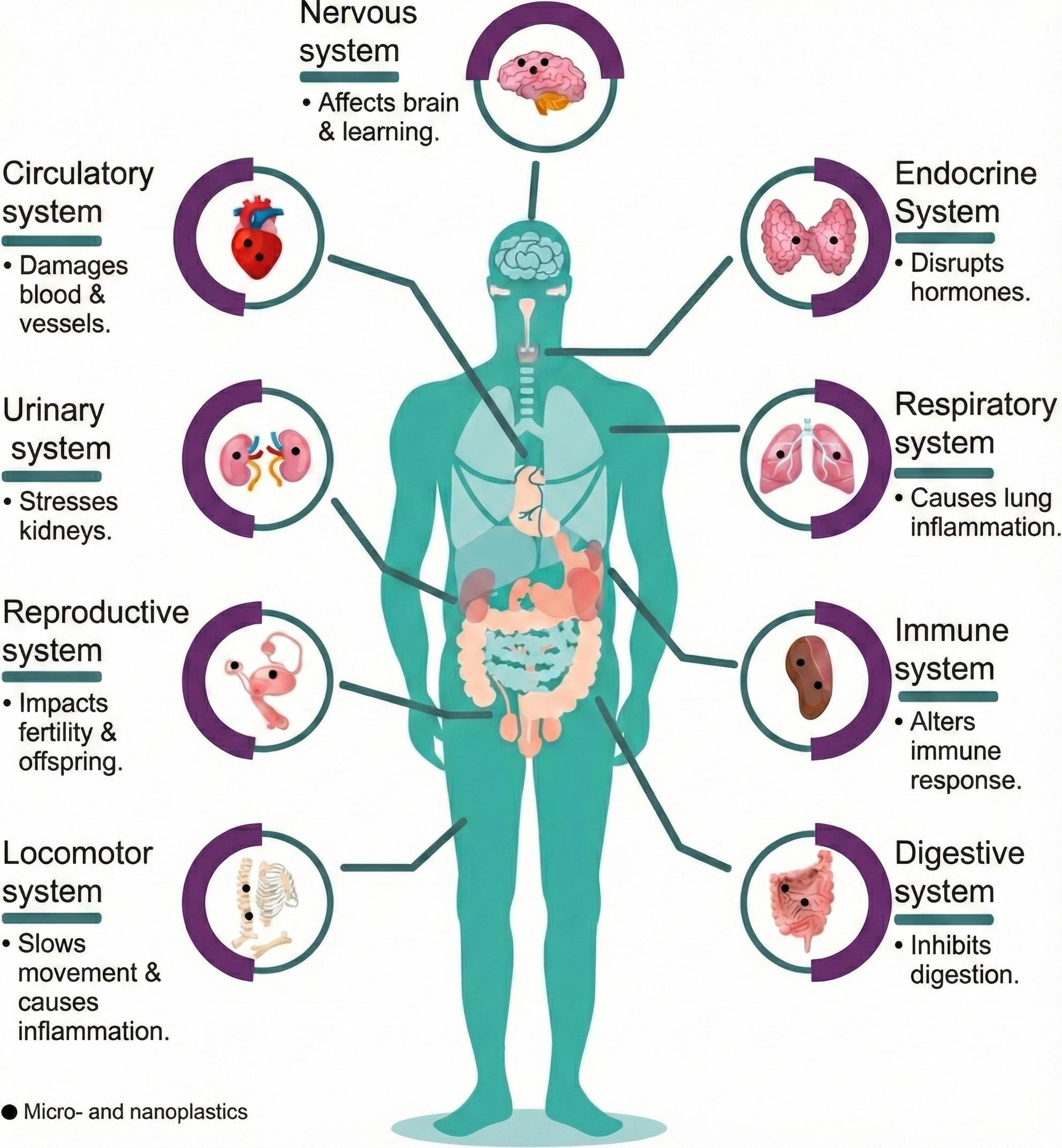
Microplastics are not just an environmental issue—they are a potential health crisis in the making. Research has found traces of microplastics in human lungs, blood, and even the placenta. Although the long-term health effects are not yet fully understood, research findings raise serious questions about the bioaccumulation of plastics in the human body and their potential to cause inflammation or interfere with biological processes. The potential impacts are shown in the figure below.
From an ethical perspective, the mere presence of synthetic particles in the natural world and human bodies is unacceptable. The precautionary principle, embraced by the Dutch government and aligned with EU strategies, demands immediate action to minimize exposure to microplastics and prevent unknown future problems.
Environmental impacts are equally dire. Microplastics disrupt ecosystems by affecting soil fertility, contaminating water sources, and entering the food chain. Marine animals, for example, often mistake microplastics for food, leading to ingestion that can block digestive systems and reduce survival rates. The environmental persistence of these particles also means that their effects are cumulative and will worsen over time without intervention.
4. Solutions to Microplastic Pollution
Addressing microplastics requires a multi-pronged strategy tailored to different industries.
1. Upstream measures
Product redesign: Redesigning products to minimize plastic usage and improve durability reduces the generation of secondary microplastics.
Use of bioplastics: Encouraging biodegradable and compostable materials, such as seaweed-based polymers in packaging and textiles, can lower microplastic release.
Bans and restrictions: Implementing bans on single-use plastics and microbeads in products is a proven method, as seen in cosmetics.
2. Downstream measures
Improved waste management: Enhancing recycling infrastructure and implementing proper waste disposal methods can significantly reduce microplastic leakage.
Wastewater treatment upgrades: Advanced filtration technologies, including nanofiltration and magnetic separation, can capture microplastics from industrial and domestic wastewater.
Leaching prevention: Training staff and adopting best practices for handling and disposing of materials can prevent unintended microplastic releases.
3. Cross-industry collaboration
Research and innovation: Investing in research to develop alternative materials, such as biodegradable coatings and eco-friendly textiles, is vital.
Industry partnerships: Collaborations between companies, academia, and governments can accelerate innovation and policy implementation.
4. Regulatory and policy measures
Setting Limits: Establishing maximum allowable microplastic emissions for different sources, such as textiles and tires, ensures accountability.
Consumer awareness: Labels indicating the presence of microplastics in products can help consumers make informed choices.
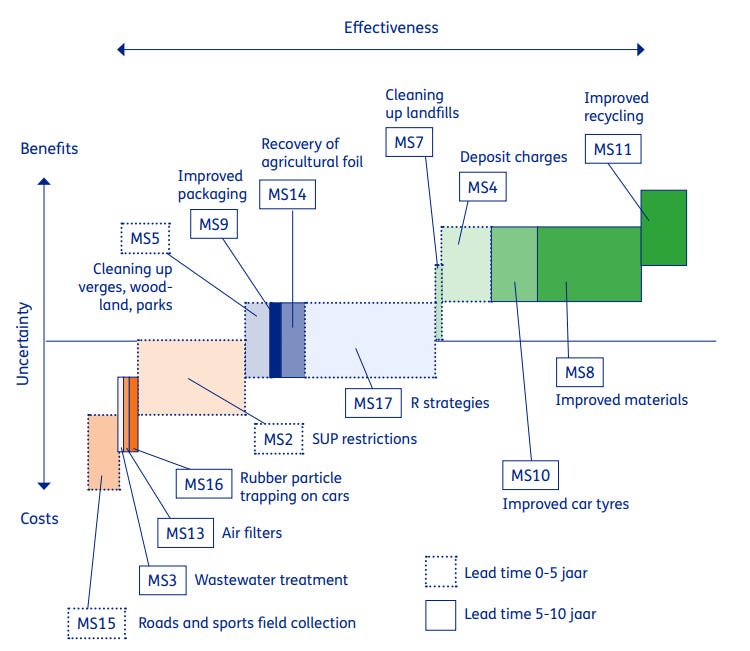
Here is an overview from TNO with possible measures and their effectiveness:
5. Microplastics under ESRS E2
As the microplastics crisis intensifies, businesses are increasingly expected to take action. Under the CSRD, companies must comprehensively disclose their environmental impacts, including microplastic pollution. ESRS E2, the standard on pollution, specifically requires reporting on microplastics generated during operations or embedded in products, as well as efforts to mitigate their impact through policies, innovation, and supply chain measures.
Whether microplastics are material to your business depends on their significance to your operations, stakeholders, and environmental impact. For the following industries microplastics are often a material issue, as it can affect reputation, compliance costs, stakeholder expectations, and long-term financial performance:
Textiles: Synthetic fibers such as polyester, nylon, and acrylic shed microplastics during production, use, and washing.
Packaging: The packaging industry generates secondary microplastics as materials degrade over time. Flexible and rigid plastic packaging, especially from polyethylene, is a major source.
Cosmetics: Microplastics, especially microbeads, have been common in personal care products. Despite increasing bans, thousands of metric tons of microplastics still enter aquatic ecosystems annually.
Paints: Often overlooked, the paint industry contributes significant amounts of microplastics through wear, tear, and disposal. Paints cause a considerable amount of microplastic leakage into waterways.
Automotive: Tyre wear particles are a primary source of microplastics, as abrasion during driving releases millions of particles onto roads, which are then carried into waterways.
The figure below can help you evaluate your company’s impact on microplastics.
6. Conclusion
Microplastics represent one of the most pressing environmental challenges of our time. While their effects on health and ecosystems are still being studied, the need for action is clear. Governments, industries, and individuals must work together to minimize the formation and spread of microplastics, leveraging innovative solutions and stringent regulations.
For businesses, the integration of microplastic disclosures into sustainability reporting under CSRD and ESRS E2 offers an opportunity to lead by example. Transparency, accountability, and proactive measures can help mitigate microplastic pollution.
Sources
https://www.europarl.europa.eu/topics/en/article/20181116STO19217/microplastics-sources-effects-and-solutions
https://www.rivm.nl/en/news/main-sources-of-microplastics-in-environment-are-tyre-erosion-plastic-waste-and-industrial
https://www.tno.nl/en/newsroom/2022/11/sources-microplastics-the-netherlands/
https://publications.tno.nl/publication/34640142/ytwrjH/TNO-2022-microplastics-eng.pdf
https://www.researchgate.net/publication/364349390_Potential_human_health_risk_assessment_of_microplastic_exposure_current_scenario_and_future_perspectives
https://www.eufic.org/en/food-safety/article/microplastics-in-food-and-water-are-they-harmful-to-human-health
https://pswordpress-production.s3.amazonaws.com/2023/05/Microplastics-in-Industry-PreScouter-2023.pdf