

1. Introduction
Transitioning to a circular economy is about setting targets and is also about tracking real progress. Without reliable data, the best circularity strategies can fall short, leading to vague sustainability claims and possibly greenwashing. To measure circularity, businesses must implement a structured data collection process that gathers the right information at the right time from the right sources. More about this in this article.

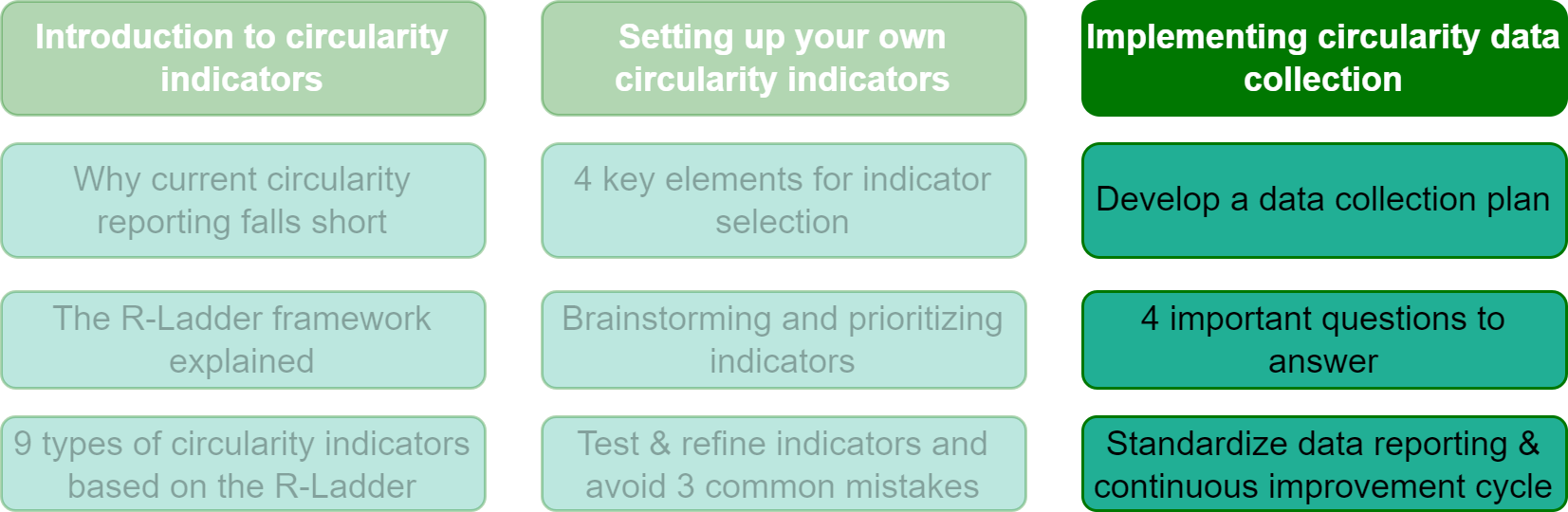
You are reading part 3 of this series:
2. Develop a data collection plan
In the previous article you have defined your indicators:

With your indicators (KPIs) defined, the next challenge is data collection. Companies should consider:
What data is needed (e.g., weight of recycled materials, product lifespan, customer return rates).
Where the data comes from (e.g., internal production reports, supplier documentation, RFID tracking).
How frequently data is collected (e.g., real-time, monthly, annually).
Who is responsible (e.g., sustainability team, procurement department, third-party auditors).
Here’s how you can approach this:
